
harles

Kuja Shop
Role
Snr Product Designer
Company
ABinBev
Industry
Beverage and Logistics
Year
Completed 2025
Download app

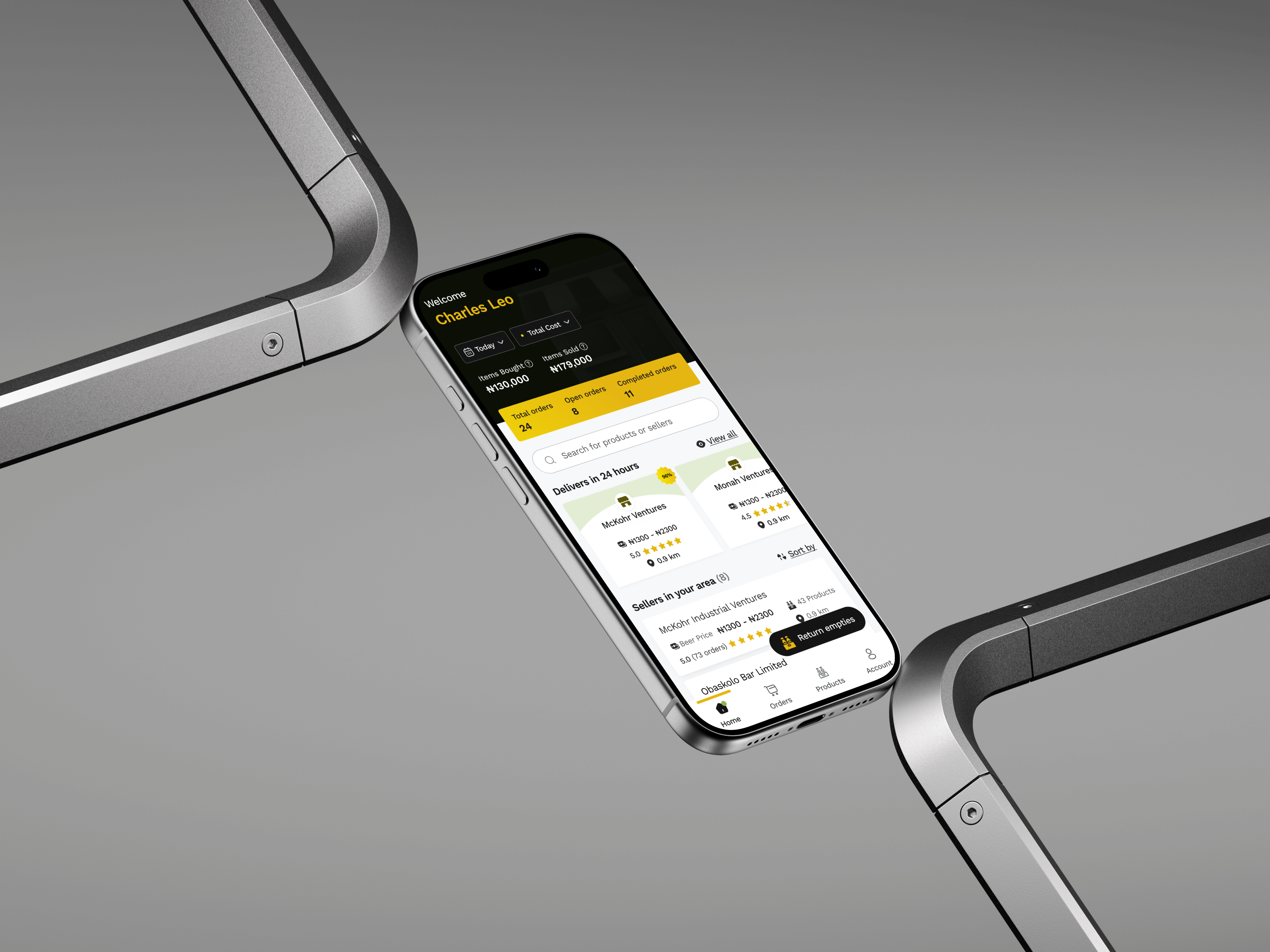
Kuja Shop is one of AB InBev Africa’s flagship digital commerce platforms, powering the daily business operations of POCs and Bulk-breakers across multiple African countries. These users rely on the platform to buy and sell ABI products, manage cash flow, track inventory, and keep their businesses running - often under challenging market conditions.
When I joined the team, Kuja Shop needed a clearer structure, more intuitive flows, and a more scalable design foundation to support its rapid growth. As the lead product designer on the mobile app, my goal was to simplify complex commerce interactions and create a marketplace experience that felt effortless, localised, and optimised for real-world constraints.
The part I played
My Role
I worked as the primary product designer on Kuja Shop, responsible for:
- Reimagining the core user journeys (ordering, restocking, payment, delivery tracking).
- Modernizing the UI design to strengthen clarity and trust.
- Creating reusable marketplace patterns that reduce cognitive load.
- Partnering with product managers, engineers, analysts, and business teams to ensure alignment across all markets.
I also supported adjacent Kuja initiatives to ensure consistency across the ecosystem.
My The Challenge
As I worked on Kuja Shop, one of the first things I had to understand was how differently our users operated. On one end were bulk-breakers, placing large-volume orders directly from International brewies. On the other were POCs, buying from bulk-breakers with tighter budgets, shorter buying cycles, and very little room for error.
My challenge was to design a single product that could serve both groups without adding complexity or slowing them down. I needed to balance speed and flexibility, making sure ordering stayed fast, stock visibility remained reliable, and fulfilment tracking felt effortless. Pricing and discounts had to be clear, and repeat purchases needed to be simple and predictable.
At the same time, I was designing for real-world constraints: low-end smartphones, unstable network connections, and users who often had just a few minutes to complete a transaction. Every design decision had to respect those realities and make the experience feel dependable, even in less-than-ideal conditions.
The solution
To address this, I designed a flexible system that supported different buying behaviors without splitting the experience into separate flows. I focused on shared core actions - browsing, checking availability, ordering, and tracking fulfilment - and optimized them to work seamlessly for both bulk-breakers and POCs.
I prioritized speed and clarity by simplifying product lists, surfacing key information early, and reducing the number of steps required to place an order. Clear stock visibility and fulfilment states helped build trust and reduce uncertainty, while transparent pricing and discounts made purchasing decisions straightforward.
I also introduced easy reordering patterns to support frequent repeat purchases. Throughout the process, I designed and tested for real-world constraints like low-end devices, unstable networks, and limited time per transaction. The result was a fast, reliable, and scalable marketplace experience that supports Kuja Shop’s growth across multiple markets.
The old

The way I approached this
My process
To ground my decisions in real usage, I started by mapping out how people actually used Kuja Shop from early-morning restocking runs to end-of-day reconciliations. Understanding these real-life scenarios helped me design with their daily rhythms in mind, not just ideal user flows.
With those insights, I focused on designing for speed and predictability. I simplified key user journeys, especially repeat orders, to reduce friction and help users complete tasks quickly and confidently.
I then explored redesign concepts through wireframes, introducing a refreshed visual direction that aligned with the new brand style using updated colors and a smoother, more modern interface while keeping the experience familiar.
Improving visual hierarchy was critical. I reworked how products, pricing, and promotions were presented so users could scan information faster and make clearer purchasing decisions.
Throughout the process, I worked closely with engineering to ensure every design decision was practical, performant, and optimized for real-world device and network constraints.
The new Kuja
Kuja Shop design highlights
Redesign key-points
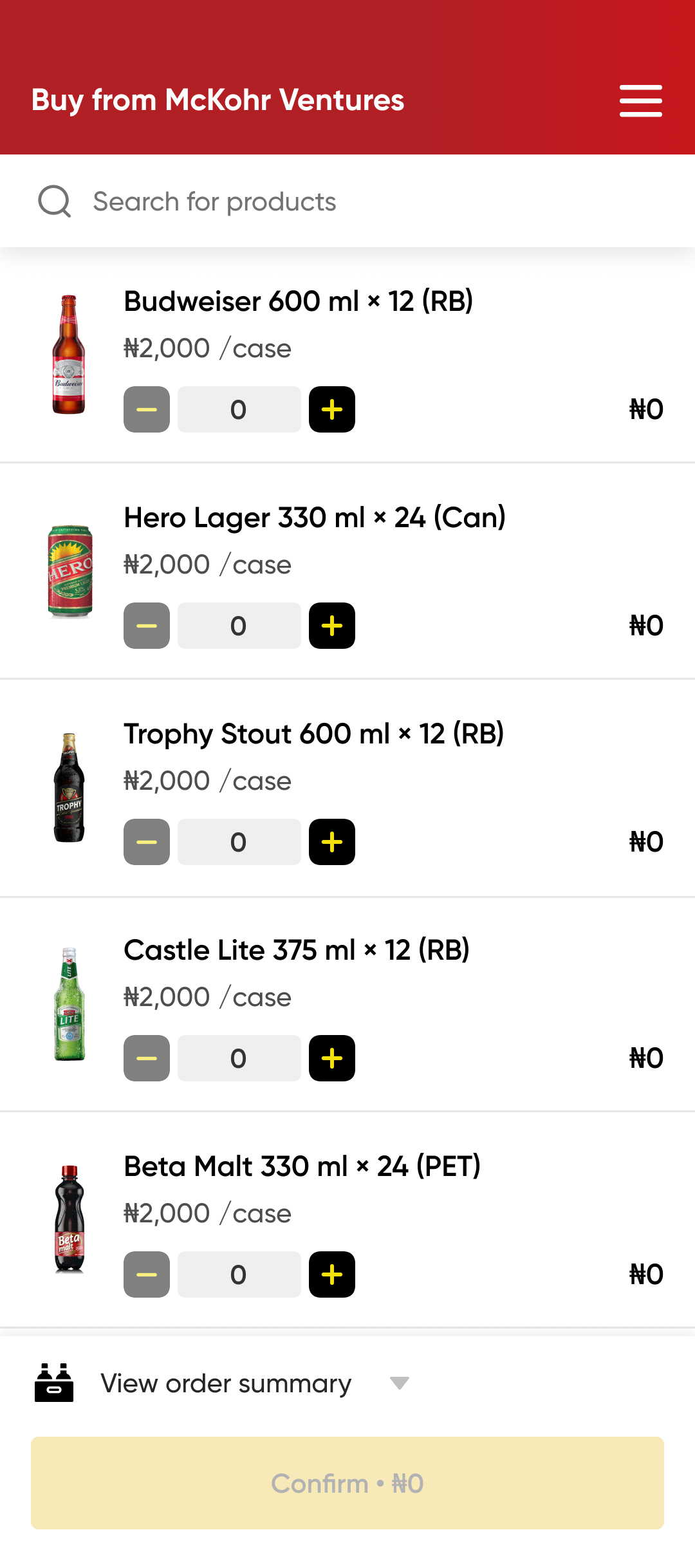
Some of the most meaningful improvements came from focusing on everyday actions and making them feel effortless. I redesigned the restocking flow so POCs could quickly reorder previous purchases in just a few seconds.
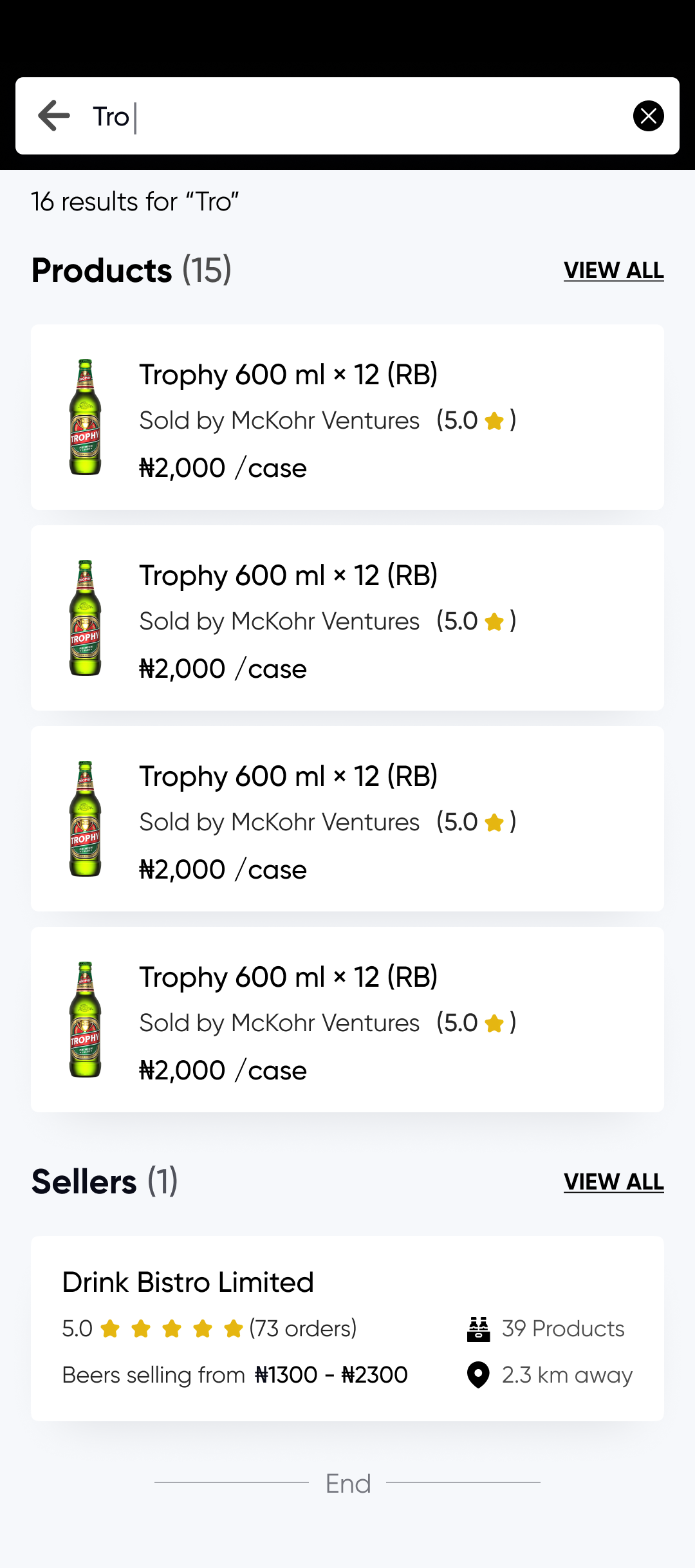
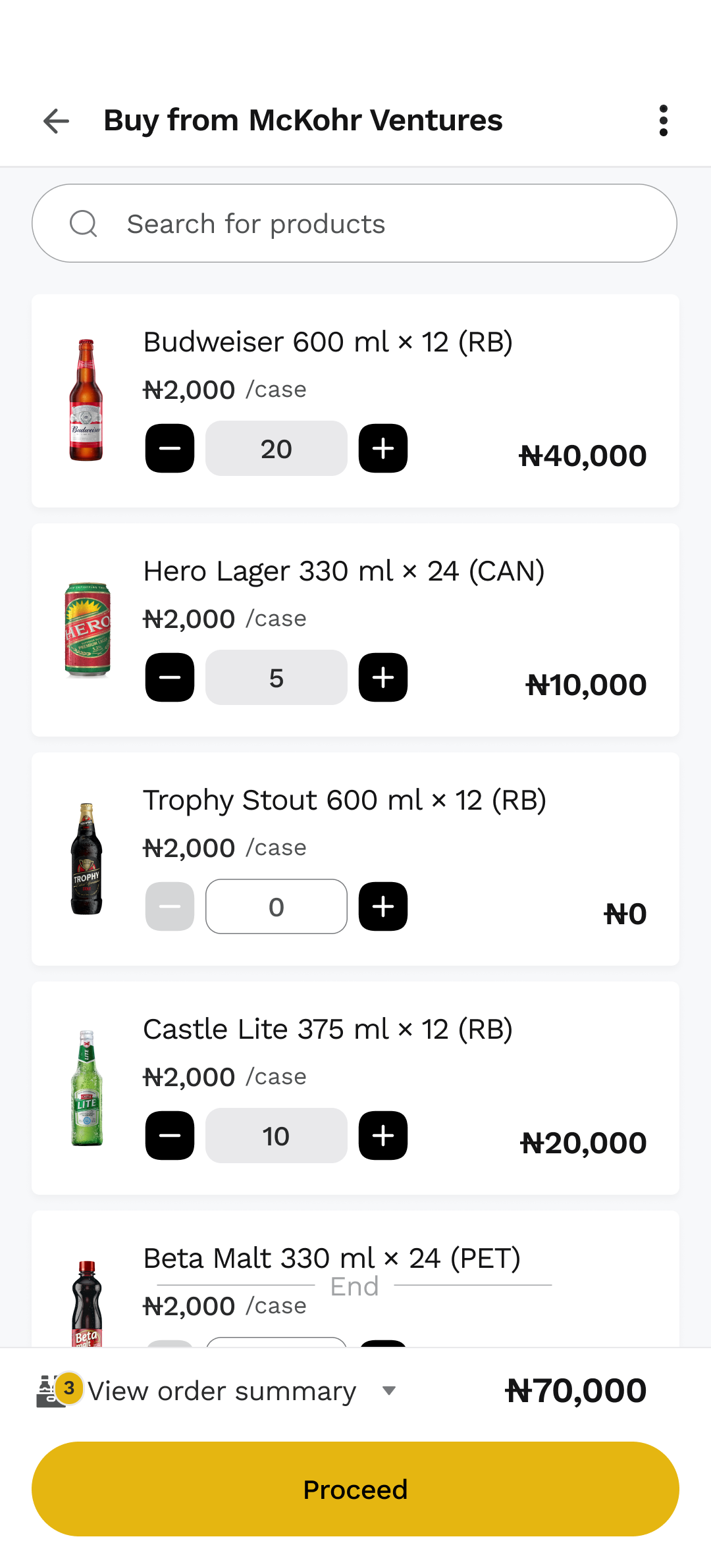
I also improved order tracking by making progress clearer and more predictable, helping users understand each stage of their order and reducing the need for support follow-ups. To enhance browsing and discovery, I introduced cleaner categorization, structured filtering, and redesigned product cards with a stronger visual hierarchy - making pricing, quantities, and comparisons easier to scan and act on.
Finally, I established a modern, scalable UI foundation aligned with the Kuja ecosystem, ensuring visual consistency and preparing the product for future growth.

Authentication flow
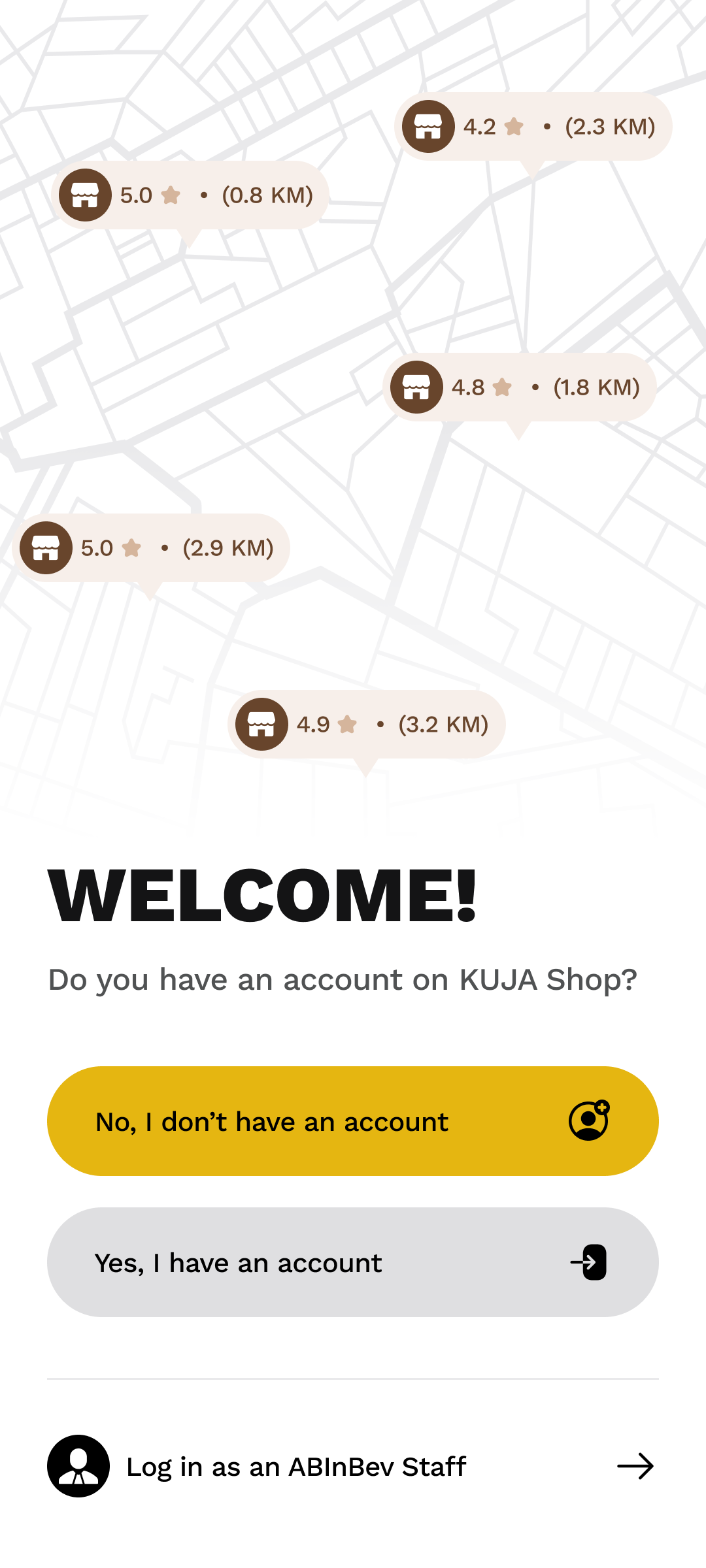
✔ Create account: Set up your Kuja shop account using either email or phone number.
✔ Verify account: Perform the account verification process using authentication code.
✔ Verify account: Perform the account verification process using authentication code.
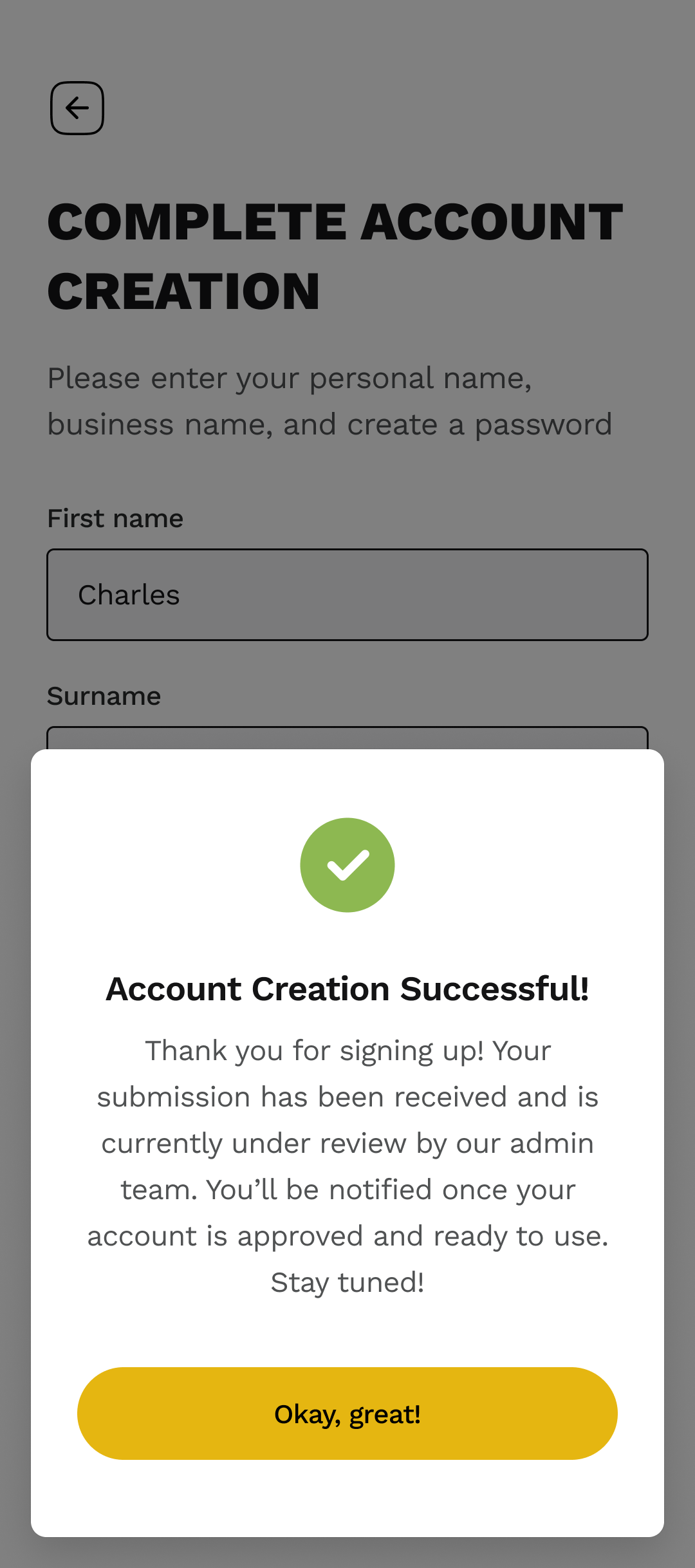
✔ Complete profile: Finish account set up by completing your profile.
Click play to view prototype.
Home flow
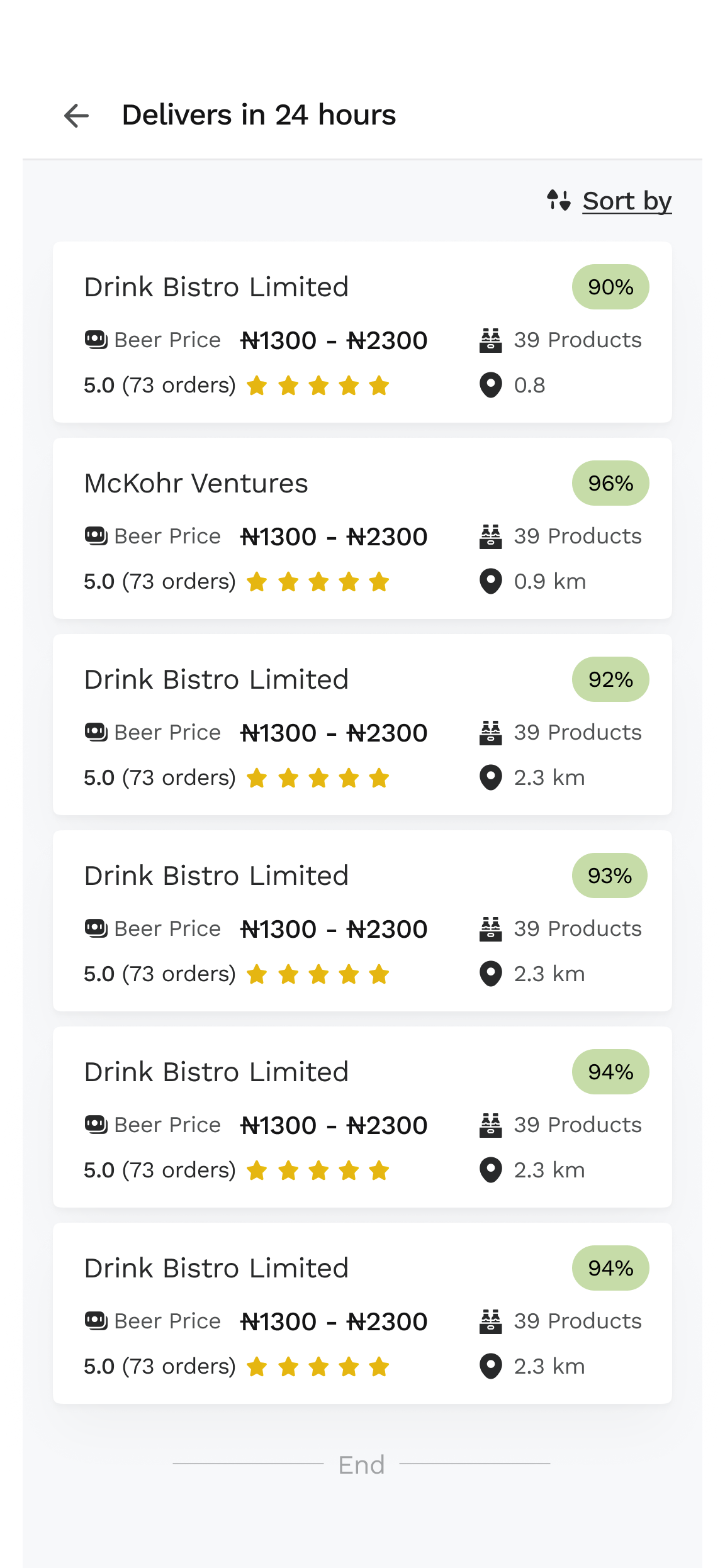
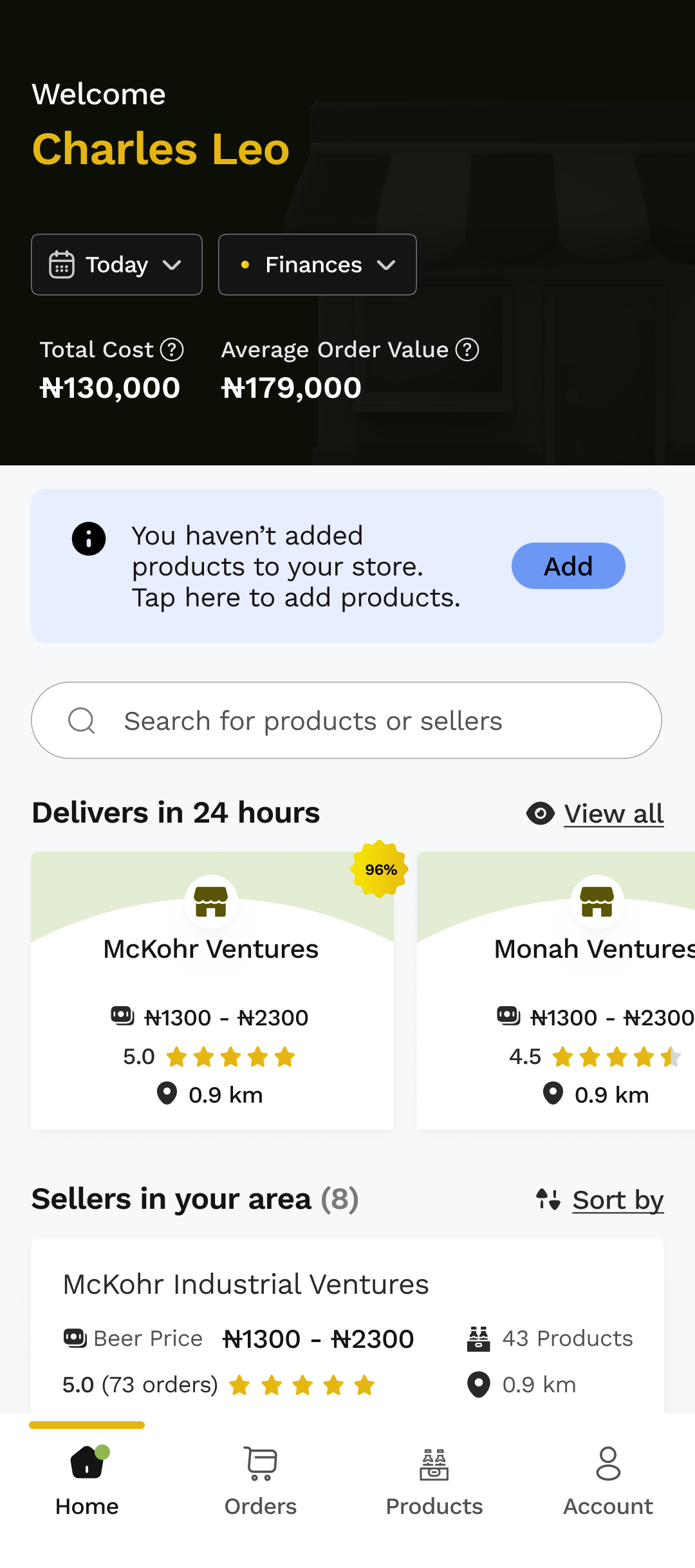
✔ Restocking made effortless: Sellers that deliver in 24hrs or sellers in your area.
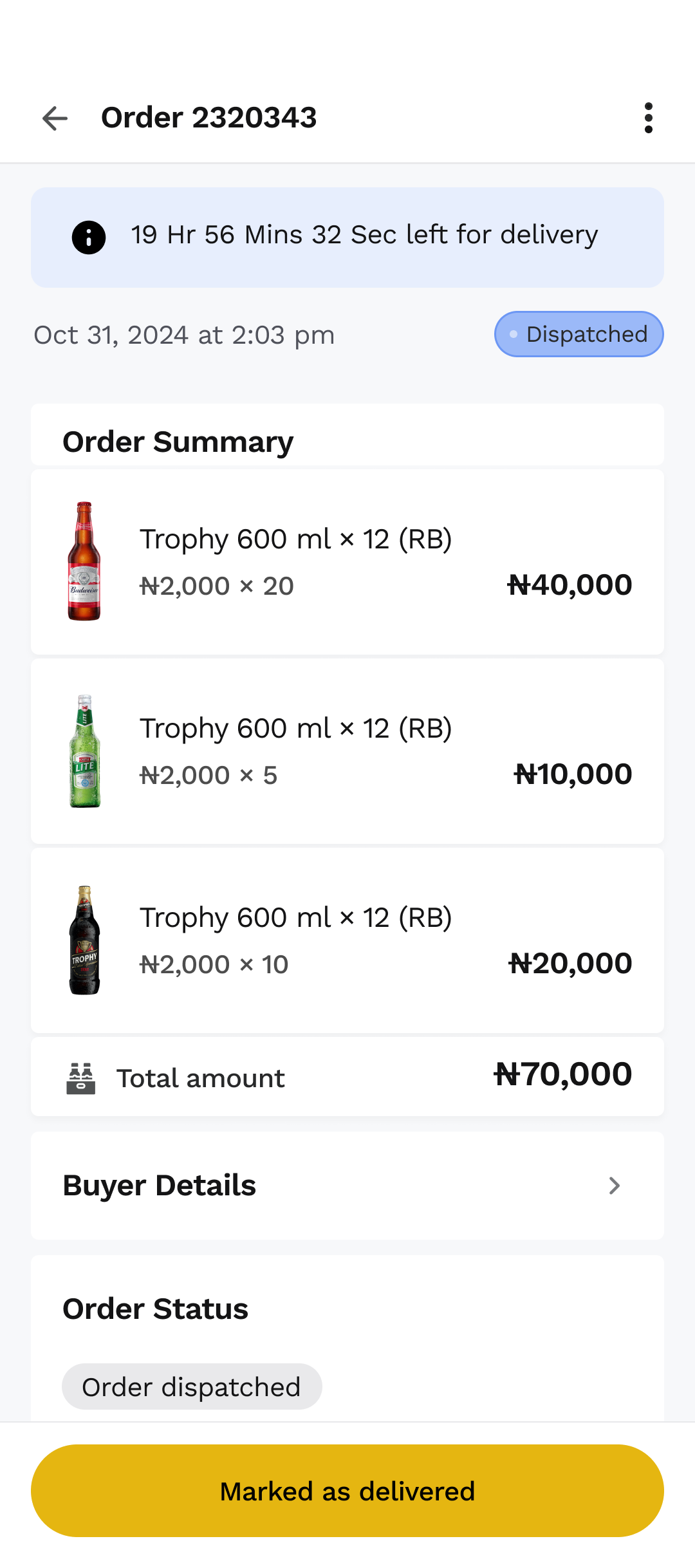
✔ Track orders: View total, open and completed orders.
✔ Business breakdown: View and manage items bought and sold.
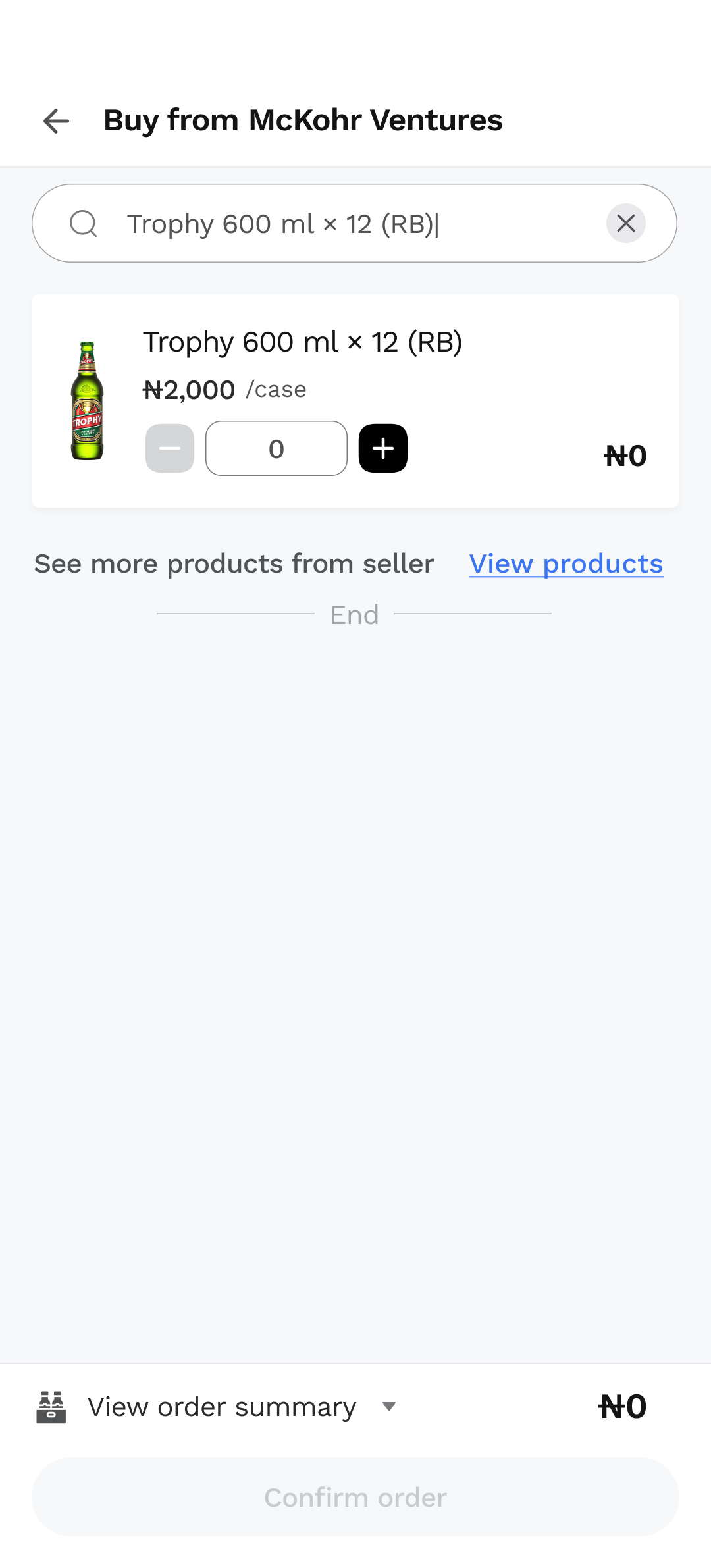
✔ Search functionality: Search for sellers or products needed.
Click play to view prototype.
Order flow
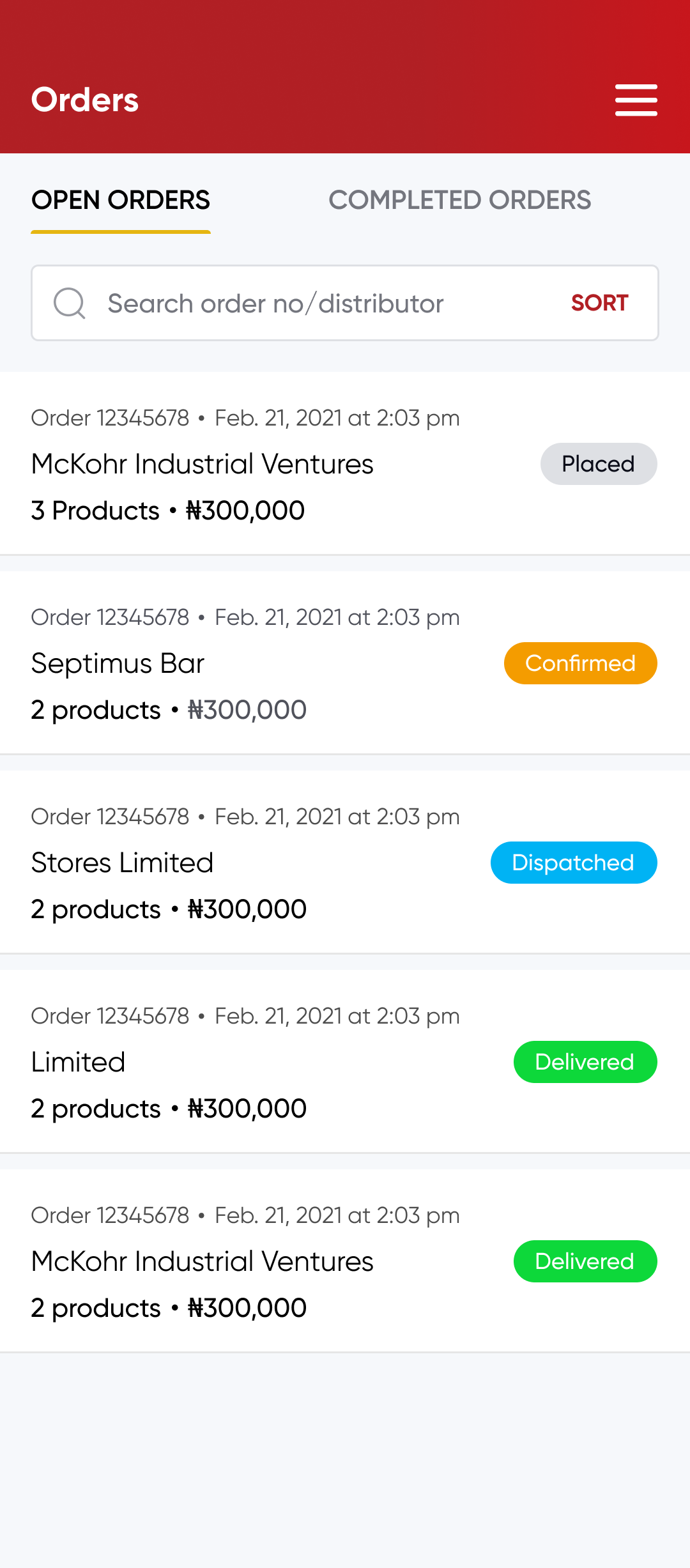
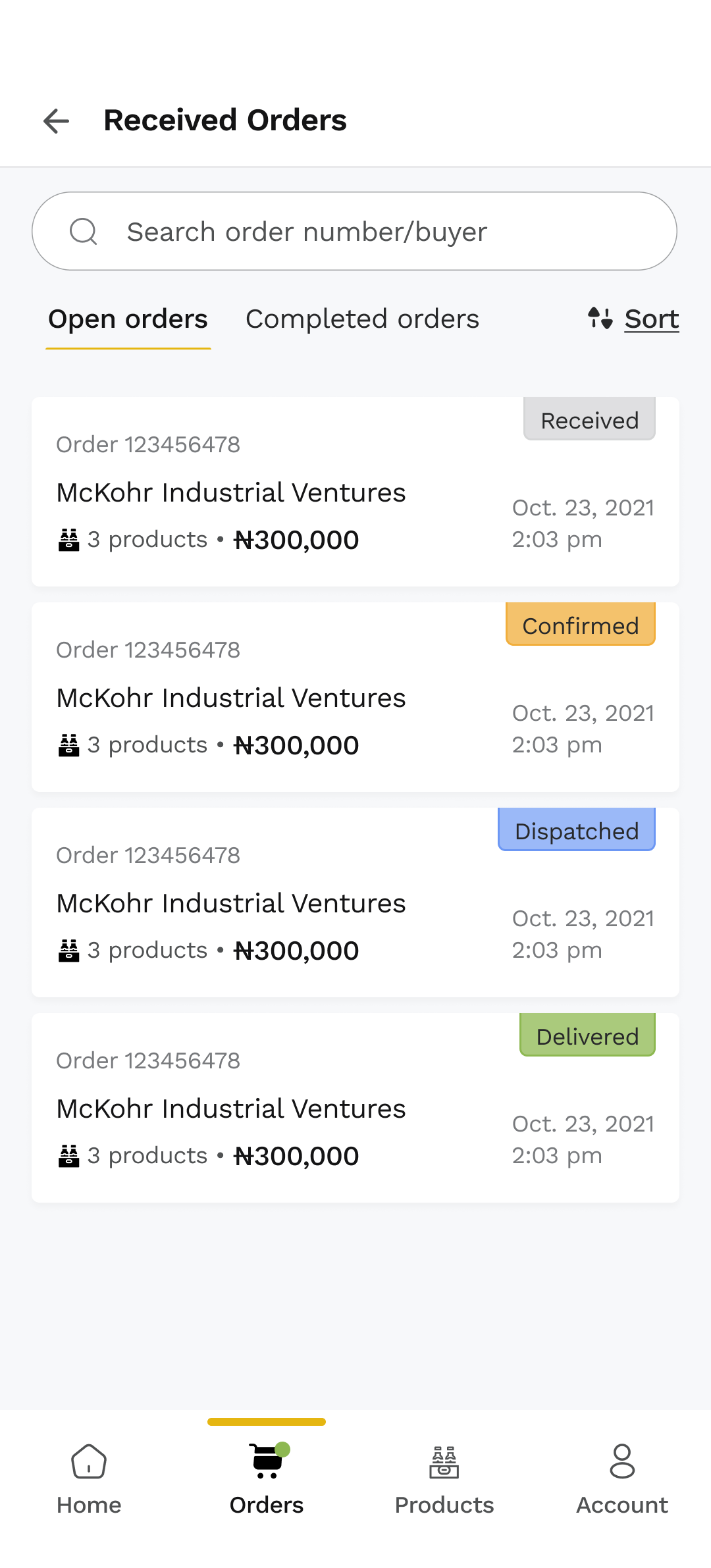
✔ Order categories: Orders are divided into open or completed orders
✔ Sort orders: Sort users based on different metrics such as status.
✔ Search functionality: Search for sellers or products needed.
Click play to view prototype.
Product flow
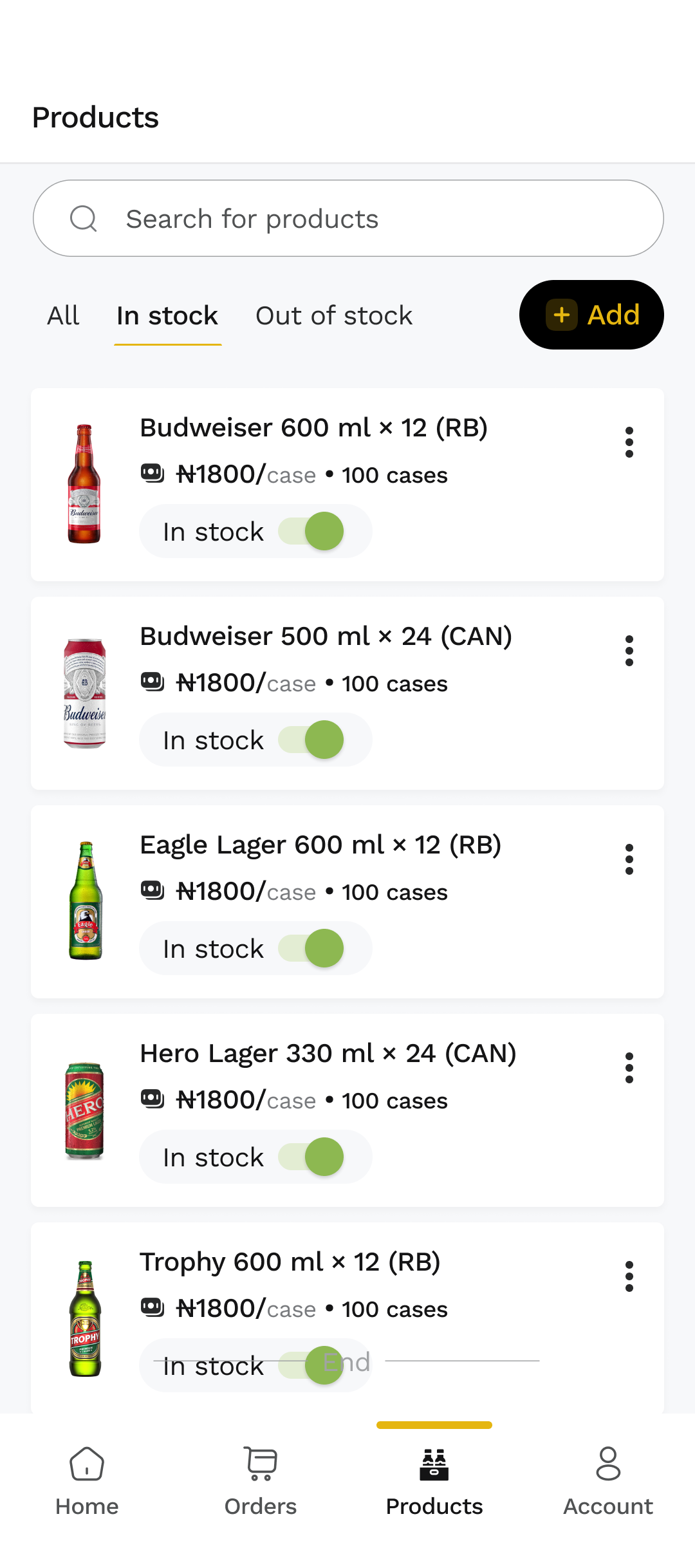
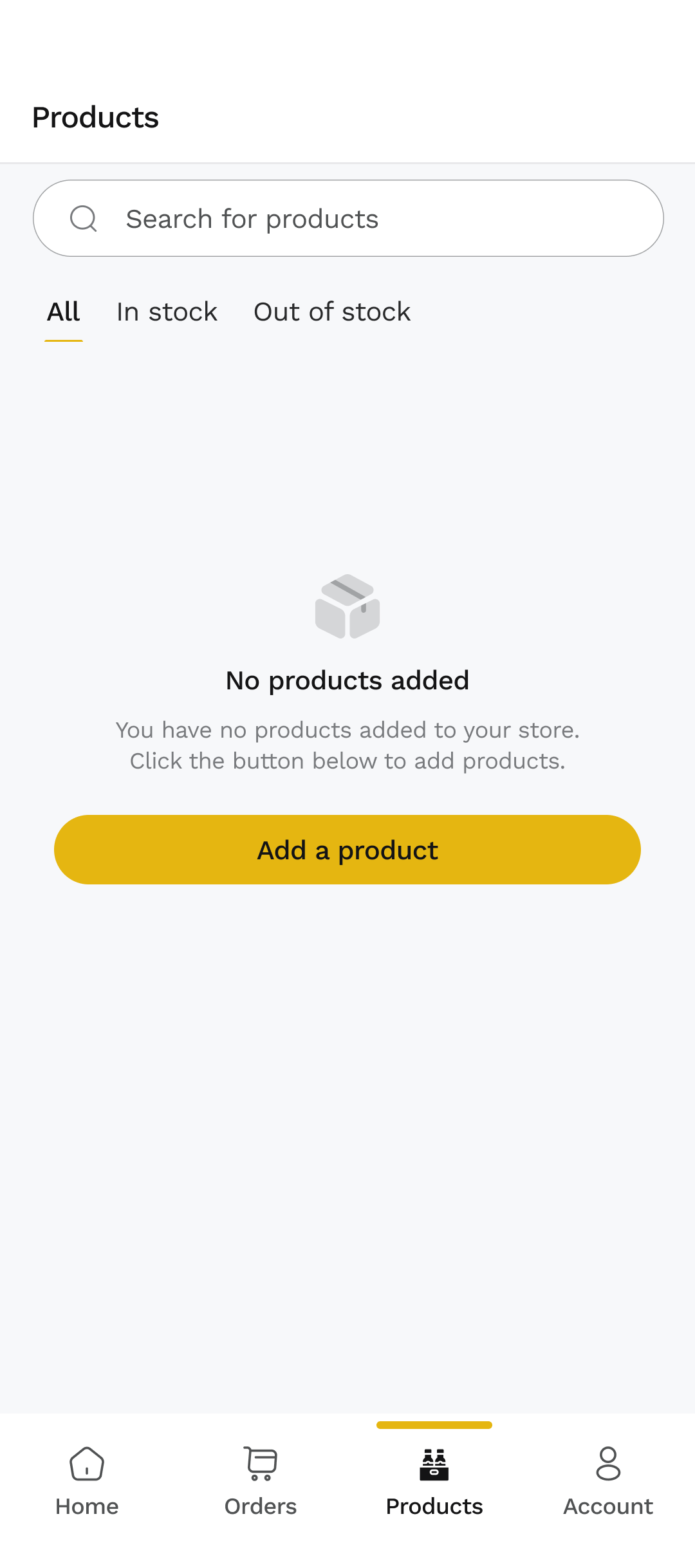
✔ Products management: Manage products in your store
✔ Products categories: View all products, products in stock or out of stock.
✔ Add new products: Add new products to sell.
Click play to view prototype.
Account flow
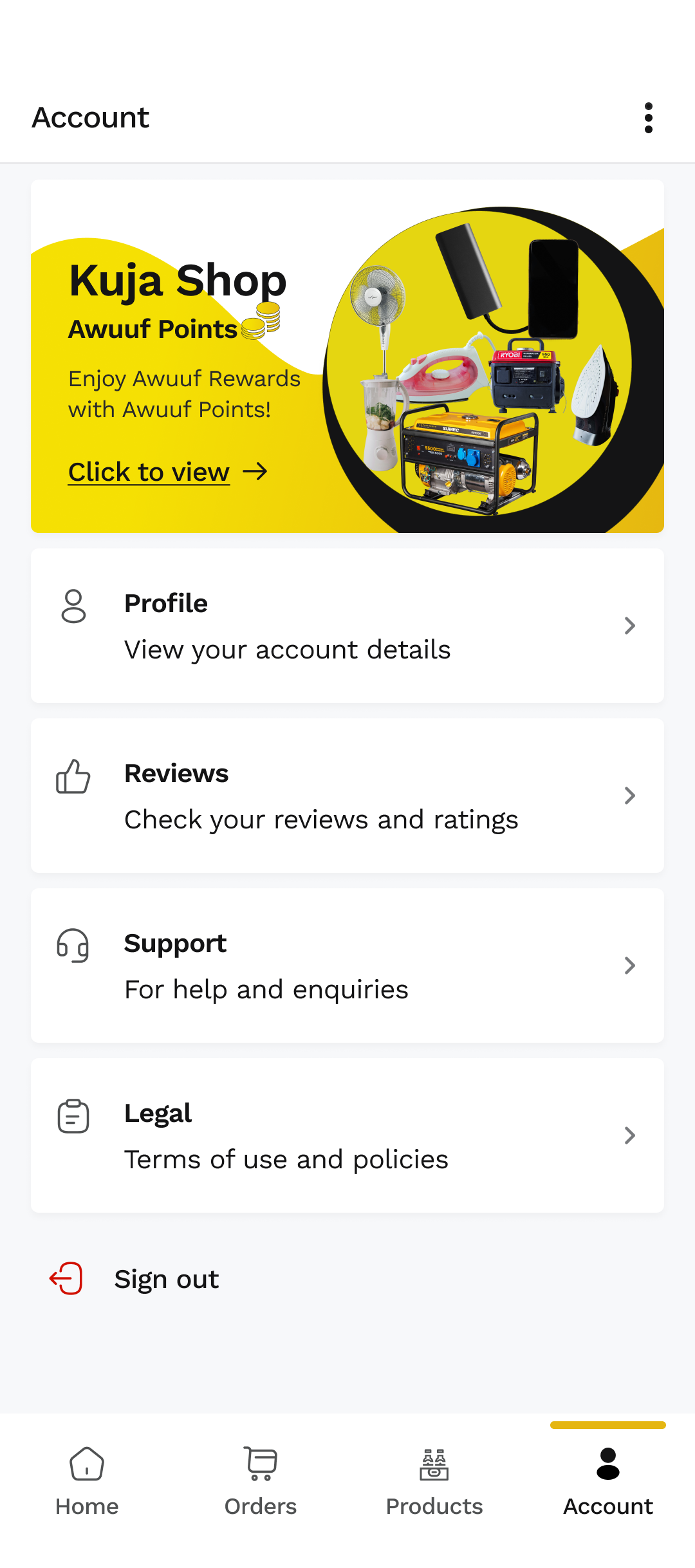
✔ Profile: Check profile and account details.
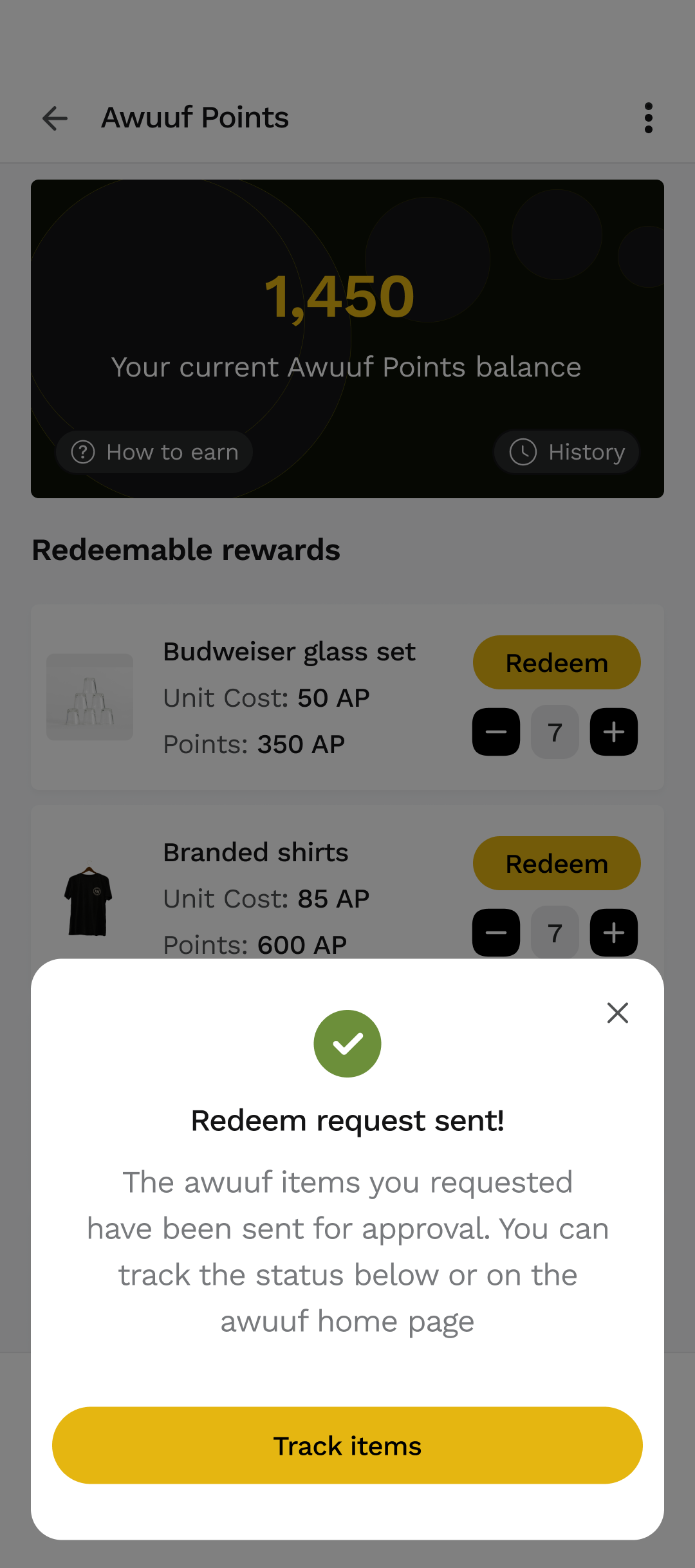
✔ Special offers: View any existing special offers like Awuuf points.
✔ Support: Contact the Kuja team for help and enquires.
Click play to view prototype.
Highlighted mockups
(Scroll to explore)
What we achieved
Results and impact
The impact of these design changes became clear in how users interacted with the product day to day. By reducing steps and simplifying key flows, I helped make ordering noticeably faster and less mentally demanding.
The redesigned restock experience streamlined the reorder flow and lifted repeat purchases by 18% within the first quarter post-launch. Improving the product hierarchy and navigation also reduced confusion, making it easier for users to find what they needed with confidence.
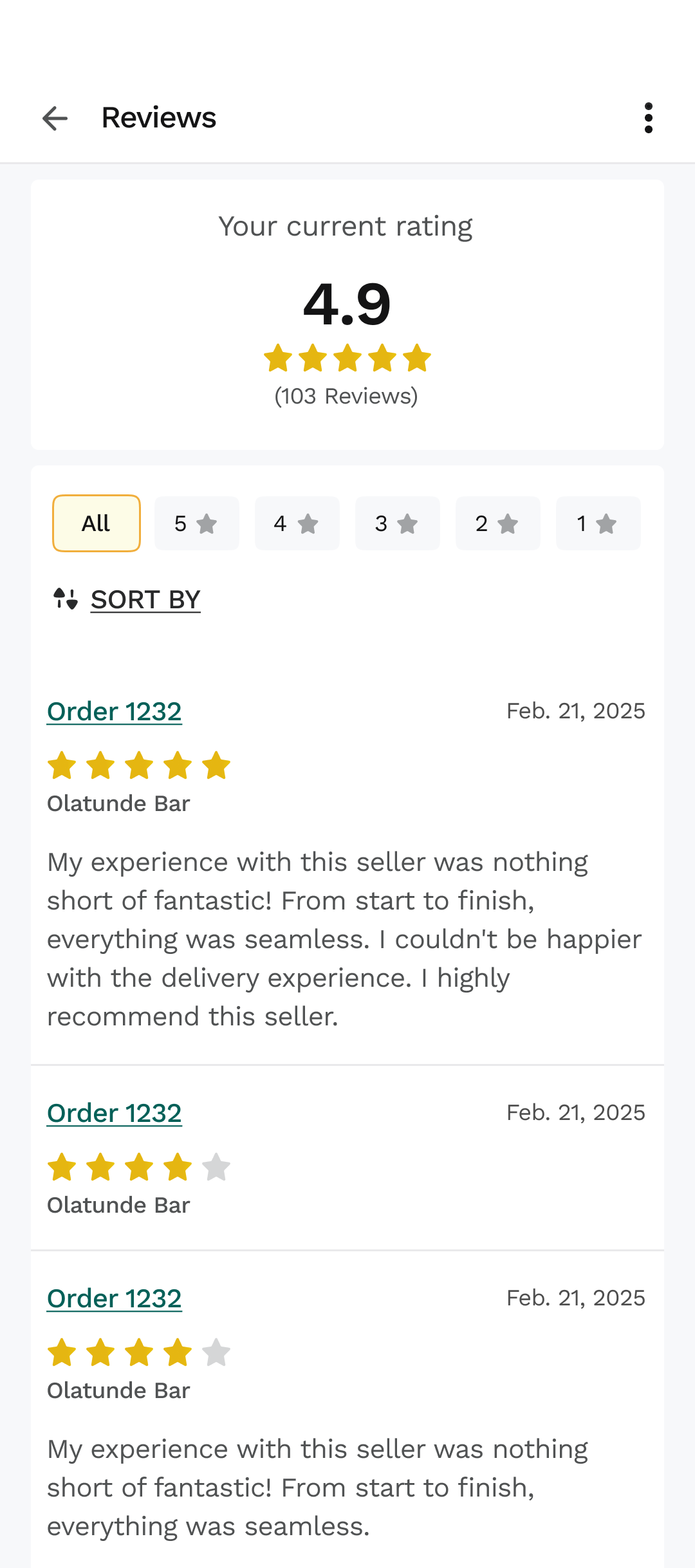
I focused heavily on building trust by making order progress more transparent. Clearer order states helped both POCs and bulk-breakers understand exactly where their orders stood, reducing uncertainty and unnecessary follow-ups.
To support real-world usage, I strengthened error handling and offline awareness, which improved the reliability of the marketplace in challenging network conditions. Finally, by introducing consistent UI patterns, I helped align Kuja Shop more closely with the broader Kuja ecosystem, creating a more unified and scalable product experience.
Reflection
My takeaways
Working on Kuja Shop deeply shaped how I approach product design. It pushed me to design for real, high-pressure business environments where every decision had commercial and operational implications. I learned how to balance genuine user needs with supply-chain constraints and business priorities, often in fast-moving and unpredictable contexts.
More importantly, the project taught me how to turn complex marketplace behavior into clear, intuitive, and purchase-ready experiences while designing for emerging markets with unique technical and environmental constraints.
This experience reinforced a core belief in my design philosophy: simple experiences drive powerful outcomes. In markets like this, simplicity isn’t a luxury - it’s essential.THANK YOU.

harles


Copyright 2025 by Charles Nwafor

Kuja Shop
Role
Snr Product Designer
Company
ABinBev
Industry
Beverage and Logistics
Year
Completed 2025
Download app
Kuja Shop is one of AB InBev Africa’s flagship digital commerce platforms, supporting the day-to-day operations of POCs and bulk-breakers across several African markets. These users depend on the platform to buy and sell ABI products, manage cash flow, track inventory, and keep their businesses running - often in challenging, fast-moving environments.
When I joined the team, it was clear that Kuja Shop needed a stronger structure, more intuitive user flows, and a scalable design foundation to keep up with its rapid growth. As the lead product designer on the mobile app, I took on the challenge of simplifying complex commerce interactions and shaping a marketplace experience that felt effortless, localized, and practical for real-world use.
My focus was not just on improving the interface, but on deeply understanding how our users operate daily and designing solutions that genuinely support how they work, make decisions, and grow their businesses.
The part I played
My Role
I worked as the primary product designer on Kuja Shop, responsible for:
- Reimagining the core user journeys (ordering, restocking, payment, delivery tracking).
- Modernizing the UI design to strengthen clarity and trust.
- Creating reusable marketplace patterns that reduce cognitive load.
- Partnering with product managers, engineers, analysts, and business teams to ensure alignment across all markets.
I also supported adjacent Kuja initiatives to ensure consistency across the ecosystem.
My The Challenge
As I worked on Kuja Shop, one of the first things I had to understand was how differently our users operated. On one end were bulk-breakers, placing large-volume orders directly from International brewies. On the other were POCs, buying from bulk-breakers with tighter budgets, shorter buying cycles, and very little room for error.
My challenge was to design a single product that could serve both groups without adding complexity or slowing them down. I needed to balance speed and flexibility, making sure ordering stayed fast, stock visibility remained reliable, and fulfilment tracking felt effortless. Pricing and discounts had to be clear, and repeat purchases needed to be simple and predictable.
At the same time, I was designing for real-world constraints: low-end smartphones, unstable network connections, and users who often had just a few minutes to complete a transaction. Every design decision had to respect those realities and make the experience feel dependable, even in less-than-ideal conditions.
The solution
To address this, I designed a flexible system that supported different buying behaviors without splitting the experience into separate flows. I focused on shared core actions - browsing, checking availability, ordering, and tracking fulfilment - and optimized them to work seamlessly for both bulk-breakers and POCs.
I prioritized speed and clarity by simplifying product lists, surfacing key information early, and reducing the number of steps required to place an order. Clear stock visibility and fulfilment states helped build trust and reduce uncertainty, while transparent pricing and discounts made purchasing decisions straightforward.
I also introduced easy reordering patterns to support frequent repeat purchases. Throughout the process, I designed and tested for real-world constraints like low-end devices, unstable networks, and limited time per transaction. The result was a fast, reliable, and scalable marketplace experience that supports Kuja Shop’s growth across multiple markets.
The new
The way I approached this
My process
To ground my decisions in real usage, I started by mapping out how people actually used Kuja Shop from early-morning restocking runs to end-of-day reconciliations. Understanding these real-life scenarios helped me design with their daily rhythms in mind, not just ideal user flows.
With those insights, I focused on designing for speed and predictability. I simplified key user journeys, especially repeat orders, to reduce friction and help users complete tasks quickly and confidently.
I then explored redesign concepts through wireframes, introducing a refreshed visual direction that aligned with the new brand style using updated colors and a smoother, more modern interface while keeping the experience familiar.
Improving visual hierarchy was critical. I reworked how products, pricing, and promotions were presented so users could scan information faster and make clearer purchasing decisions.
Throughout the process, I worked closely with engineering to ensure every design decision was practical, performant, and optimized for real-world device and network constraints.
The new Kuja
Kuja Shop design highlights
Redesign key-points
Some of the most meaningful improvements came from focusing on everyday actions and making them feel effortless. I redesigned the restocking flow so POCs could quickly reorder previous purchases in just a few seconds.
I also improved order tracking by making progress clearer and more predictable, helping users understand each stage of their order and reducing the need for support follow-ups. To enhance browsing and discovery, I introduced cleaner categorization, structured filtering, and redesigned product cards with a stronger visual hierarchy - making pricing, quantities, and comparisons easier to scan and act on.
Finally, I established a modern, scalable UI foundation aligned with the Kuja ecosystem, ensuring visual consistency and preparing the product for future growth.
Authentication flow
✔ Create account: Set up your Kuja shop account using either email or phone number.
✔ Verify account: Perform the account verification process using authentication code.
✔ Verify account: Perform the account verification process using authentication code.
✔ Complete profile: Finish account set up by completing profile.
Click play to view prototype.
Home flow
✔ Restocking made effortless: Sellers that deliver in 24hrs or sellers in your area.
✔ Track orders: View total, open and completed orders.
✔ Business breakdown: View and manage items bought and sold.
✔ Search functionality: Search for sellers or products needed.
Click play to view prototype.
Order flow
✔ Order categories: Orders are divided into open or completed orders
✔ Sort orders: Sort users based on different metrics such as status.
✔ Search functionality: Search for sellers or products needed.
Click play to view prototype.
Product flow
✔ Products management: Manage products in your store
✔ Products categories: View all products, products in stock or out of stock.
✔ Add new products: Add new products to sell.
Click play to view prototype.
Account flow
✔ Profile: Check profile and account details.
✔ Special offers: View any existing special offers like Awuuf points.
✔ Support: Contact the Kuja team for help and enquires.
Click play to view prototype.
Highlighted mockups
What we achieved
Results and impact
The impact of these design changes became clear in how users interacted with the product day to day. By reducing steps and simplifying key flows, I helped make ordering noticeably faster and less mentally demanding.
The redesigned restock experience streamlined the reorder flow and lifted repeat purchases by 18% within the first quarter post-launch. Improving the product hierarchy and navigation also reduced confusion, making it easier for users to find what they needed with confidence.
I focused heavily on building trust by making order progress more transparent. Clearer order states helped both POCs and bulk-breakers understand exactly where their orders stood, reducing uncertainty and unnecessary follow-ups.
To support real-world usage, I strengthened error handling and offline awareness, which improved the reliability of the marketplace in challenging network conditions. Finally, by introducing consistent UI patterns, I helped align Kuja Shop more closely with the broader Kuja ecosystem, creating a more unified and scalable product experience.
Reflection
My takeaways
Working on Kuja Shop deeply shaped how I approach product design. It pushed me to design for real, high-pressure business environments where every decision had commercial and operational implications. I learned how to balance genuine user needs with supply-chain constraints and business priorities, often in fast-moving and unpredictable contexts.
More importantly, the project taught me how to turn complex marketplace behavior into clear, intuitive, and purchase-ready experiences while designing for emerging markets with unique technical and environmental constraints.
This experience reinforced a core belief in my design philosophy: simple experiences drive powerful outcomes. In markets like this, simplicity isn’t a luxury - it’s essential.THANK YOU.
harles
Copyright 2025 by Charles Nwafor
Kuja Shop
Role
Snr Product Designer
Company
ABinBev
Industry
Beverage and Logistics
Year
Completed 2025
Download app
Kuja Shop is one of AB InBev Africa’s flagship digital commerce platforms, supporting the day-to-day operations of POCs and bulk-breakers across several African markets. These users depend on the platform to buy and sell ABI products, manage cash flow, track inventory, and keep their businesses running - often in challenging, fast-moving environments.
When I joined the team, it was clear that Kuja Shop needed a stronger structure, more intuitive user flows, and a scalable design foundation to keep up with its rapid growth. As the lead product designer on the mobile app, I took on the challenge of simplifying complex commerce interactions and shaping a marketplace experience that felt effortless, localized, and practical for real-world use.
My focus was not just on improving the interface, but on deeply understanding how our users operate daily and designing solutions that genuinely support how they work, make decisions, and grow their businesses.
The part I played
My Role
I worked as the primary product designer on Kuja Shop, responsible for:
- Reimagining the core user journeys (ordering, restocking, payment, delivery tracking).
- Modernizing the UI design to strengthen clarity and trust.
- Creating reusable marketplace patterns that reduce cognitive load.
- Partnering with product managers, engineers, analysts, and business teams to ensure alignment across all markets.
I also supported adjacent Kuja initiatives to ensure consistency across the ecosystem.
The Challenge
As I worked on Kuja Shop, one of the first things I had to understand was how differently our users operated. On one end were bulk-breakers, placing large-volume orders directly from International Breweries. On the other were POCs, buying from bulk-breakers with tighter budgets, shorter buying cycles, and very little room for error.
My challenge was to design a single product that could serve both groups without adding complexity or slowing them down. I needed to balance speed and flexibility, making sure ordering stayed fast, stock visibility remained reliable, and fulfilment tracking felt effortless. Pricing and discounts had to be clear, and repeat purchases needed to be simple and predictable.
At the same time, I was designing for real-world constraints: low-end smartphones, unstable network connections, and users who often had just a few minutes to complete a transaction. Every design decision had to respect those realities and make the experience feel dependable, even in less-than-ideal conditions.
The solution
To address this, I designed a flexible system that supported different buying behaviors without splitting the experience into separate flows. I focused on shared core actions - browsing, checking availability, ordering, and tracking fulfilment - and optimized them to work seamlessly for both bulk-breakers and POCs.
I prioritized speed and clarity by simplifying product lists, surfacing key information early, and reducing the number of steps required to place an order. Clear stock visibility and fulfilment states helped build trust and reduce uncertainty, while transparent pricing and discounts made purchasing decisions straightforward.
I also introduced easy reordering patterns to support frequent repeat purchases. Throughout the process, I designed and tested for real-world constraints like low-end devices, unstable networks, and limited time per transaction. The result was a fast, reliable, and scalable marketplace experience that supports Kuja Shop’s growth across multiple markets.
The old Kuja
The way I approached this
My process
To ground my decisions in real usage, I started by mapping out how people actually used Kuja Shop from early-morning restocking runs to end-of-day reconciliations. Understanding these real-life scenarios helped me design with their daily rhythms in mind, not just ideal user flows.
With those insights, I focused on designing for speed and predictability. I simplified key user journeys, especially repeat orders, to reduce friction and help users complete tasks quickly and confidently.
I then explored redesign concepts through wireframes, introducing a refreshed visual direction that aligned with the new brand style using updated colors and a smoother, more modern interface while keeping the experience familiar.
Improving visual hierarchy was critical. I reworked how products, pricing, and promotions were presented so users could scan information faster and make clearer purchasing decisions.
Throughout the process, I worked closely with engineering to ensure every design decision was practical, performant, and optimized for real-world device and network constraints.
The new Kuja
Kuja Shop design highlights
Redesign key-points
Some of the most meaningful improvements came from focusing on everyday actions and making them feel effortless. I redesigned the restocking flow so POCs could quickly reorder previous purchases in just a few seconds.
I also improved order tracking by making progress clearer and more predictable, helping users understand each stage of their order and reducing the need for support follow-ups. To enhance browsing and discovery, I introduced cleaner categorization, structured filtering, and redesigned product cards with a stronger visual hierarchy - making pricing, quantities, and comparisons easier to scan and act on.
Finally, I established a modern, scalable UI foundation aligned with the Kuja ecosystem, ensuring visual consistency and preparing the product for future growth.
Authentication flow
✔ Create account: Set up your Kuja shop account using either email or phone number.
✔ Verify account: Perform the account verification process using authentication code.
✔ Complete profile: Finish account set up by completing your profile.
Click play to view prototype.
Home flow
✔ Business breakdown: View and manage items bought and sold.
✔ Track orders: View total, open and completed orders.
✔ Search functionality: Search for sellers or products needed.
✔ Restocking made effortless: Sellers that deliver in 24hrs or sellers in your area.
Click play to view prototype.
Order flow
✔ Order categories: Orders are divided into open or completed orders
✔ Sort orders: Sort users based on different metrics such as status.
✔ Search functionality: Search for sellers or products needed.
Click play to view prototype.
Product flow
✔ Products management: Manage products in your store
✔ Products categories: View all products, products in stock or out of stock.
✔ Add new products: Add new products to sell.
Click play to view prototype.
Account flow
✔ Profile: Check profile and account details.
✔ Special offers: View any existing special offers like Awuuf points.
✔ Support: Contact the Kuja team for help and enquires.
Click play to view prototype.
Highlighted mockups
What we achieved
Results and impact
The impact of these design changes became clear in how users interacted with the product day to day. By reducing steps and simplifying key flows, I helped make ordering noticeably faster and less mentally demanding.
The redesigned restock experience streamlined the reorder flow and lifted repeat purchases by 18% within the first quarter post-launch. Improving the product hierarchy and navigation also reduced confusion, making it easier for users to find what they needed with confidence.
I focused heavily on building trust by making order progress more transparent. Clearer order states helped both POCs and bulk-breakers understand exactly where their orders stood, reducing uncertainty and unnecessary follow-ups.
To support real-world usage, I strengthened error handling and offline awareness, which improved the reliability of the marketplace in challenging network conditions. Finally, by introducing consistent UI patterns, I helped align Kuja Shop more closely with the broader Kuja ecosystem, creating a more unified and scalable product experience.
Reflection
My takeaways
Working on Kuja Shop deeply shaped how I approach product design. It pushed me to design for real, high-pressure business environments where every decision had commercial and operational implications. I learned how to balance genuine user needs with supply-chain constraints and business priorities, often in fast-moving and unpredictable contexts.
More importantly, the project taught me how to turn complex marketplace behavior into clear, intuitive, and purchase-ready experiences while designing for emerging markets with unique technical and environmental constraints.
This experience reinforced a core belief in my design philosophy: simple experiences drive powerful outcomes. In markets like this, simplicity isn’t a luxury - it’s essential.THANK YOU.
Other projects
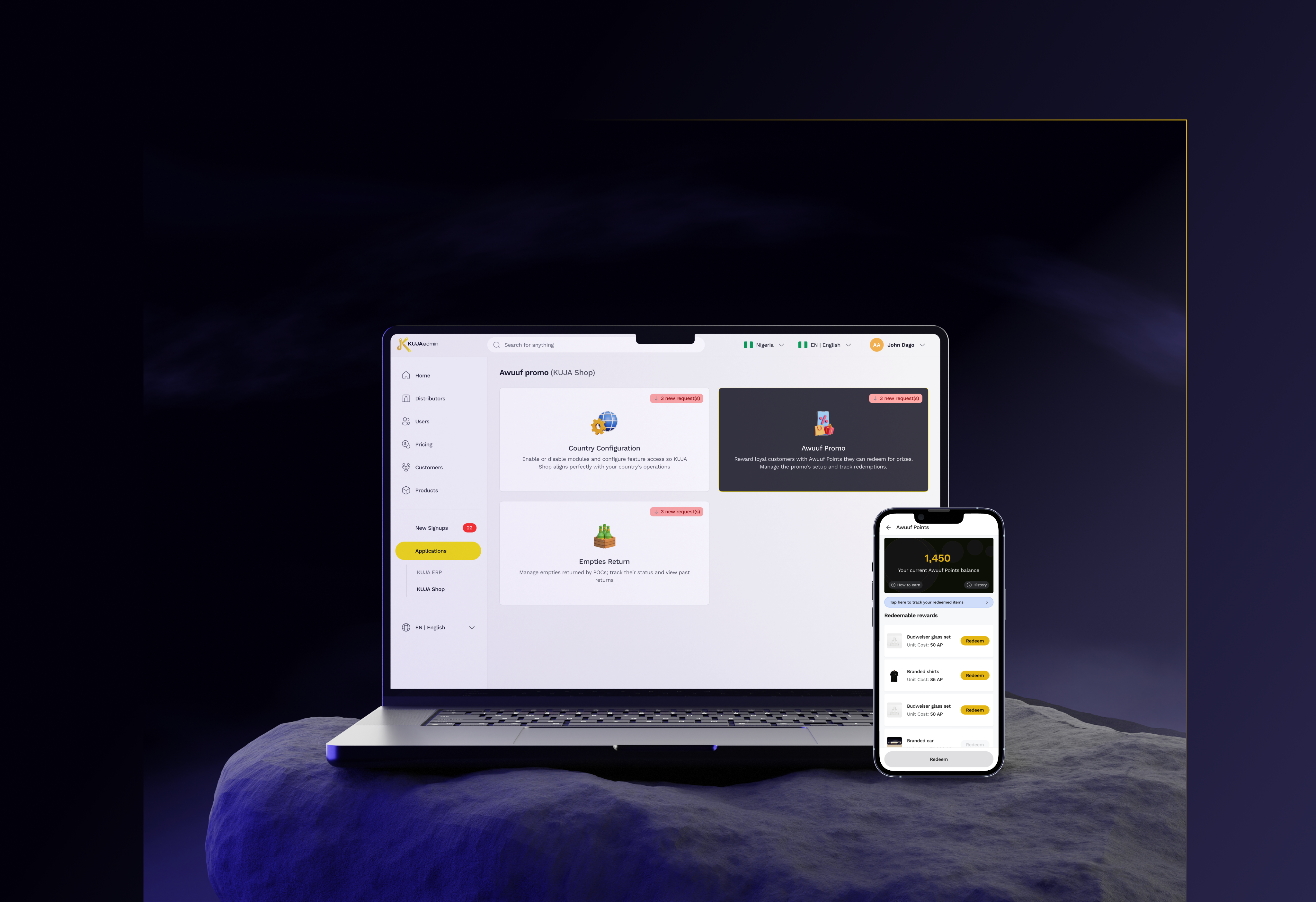
KUJA Awuuf
Kuja Awuuf app feature
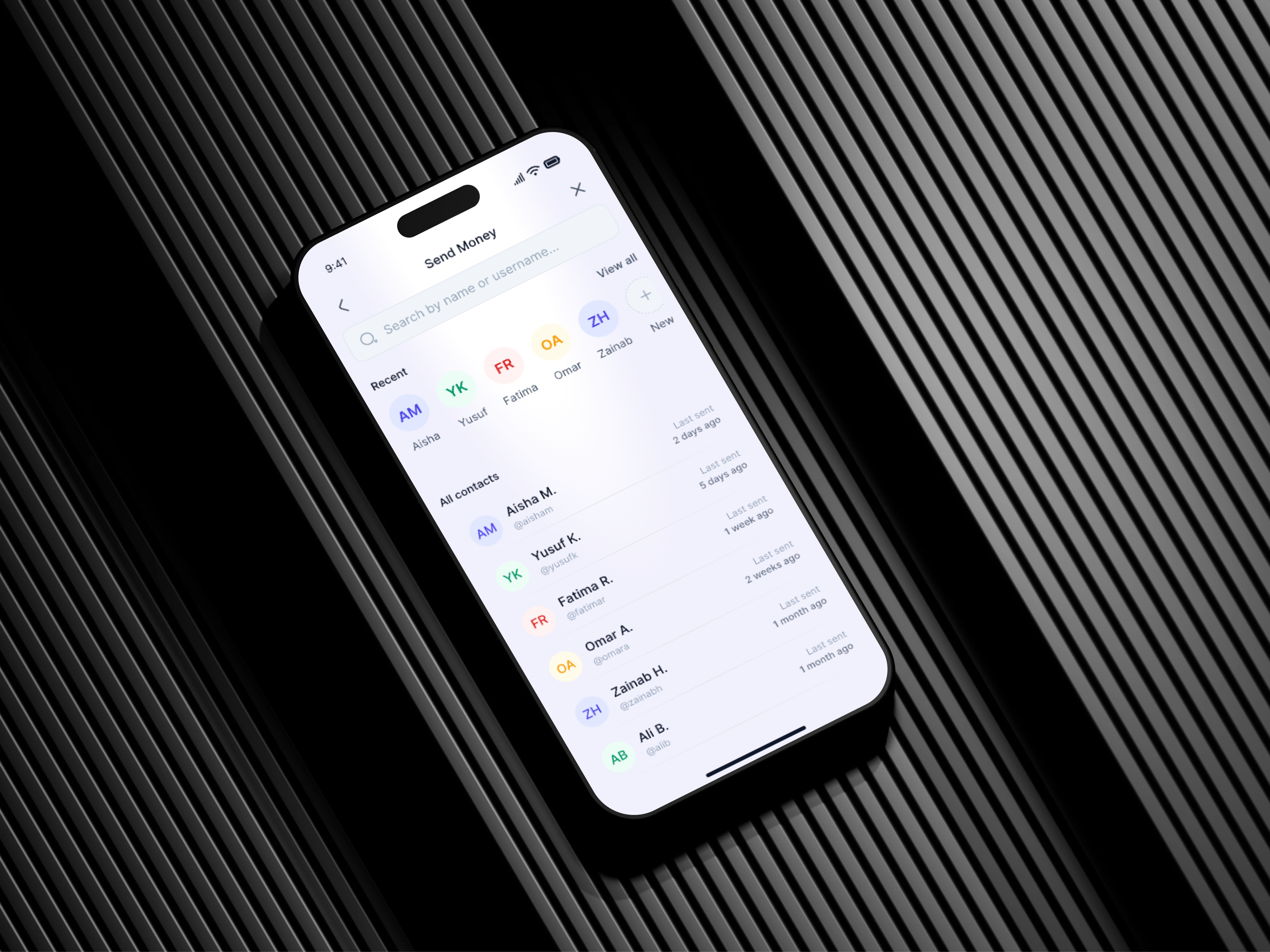
MAL mobile app
AI Gave Me a Blueprint. The Design Was Mine
harles
Copyright 2025 by Charles Nwafor