
harles

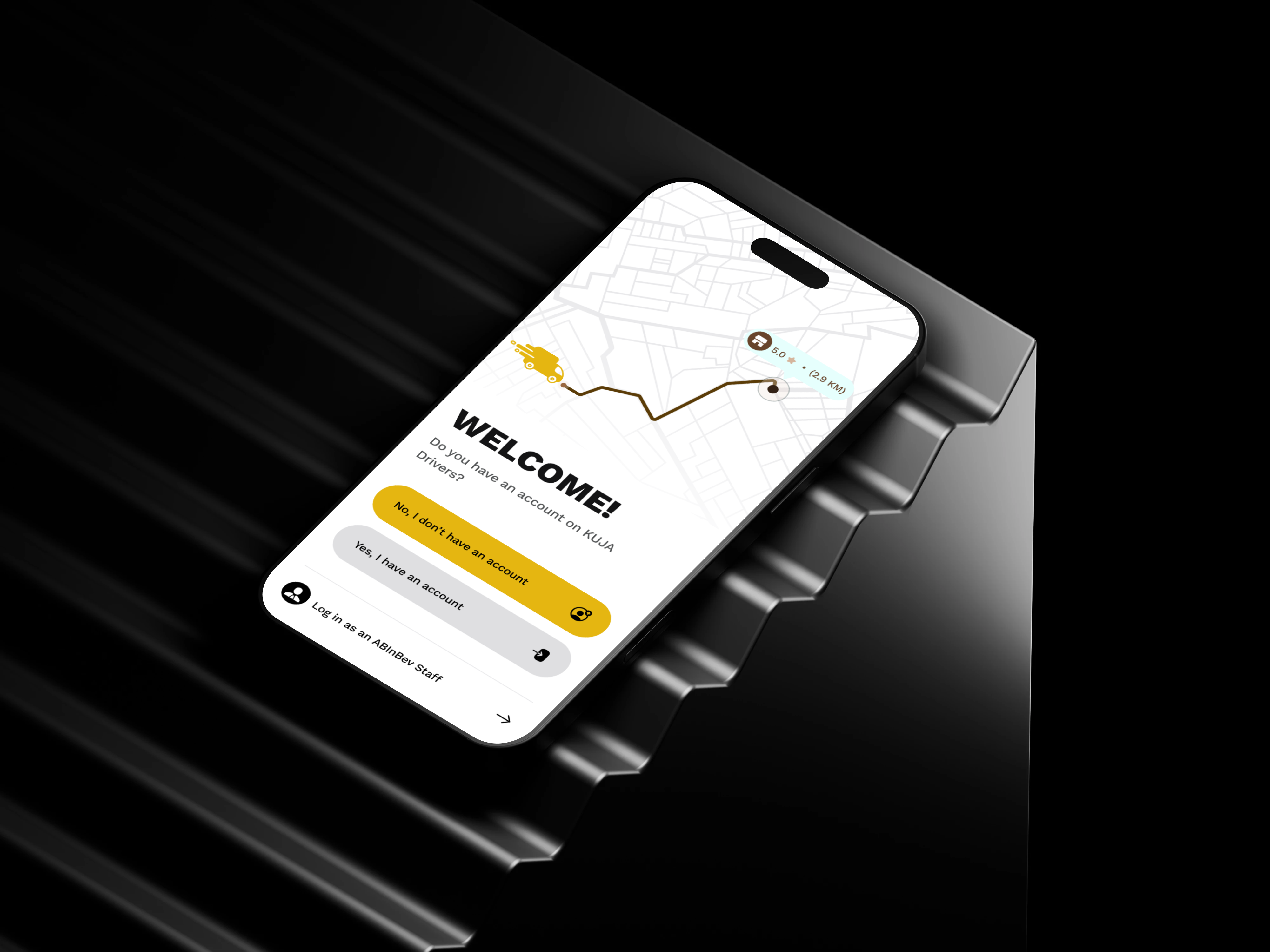
Kuja Drivers
Role
Snr Product Designer
Company
ABinBev
Industry
Beverage and Logistics
Year
Completed 2025
When I worked on Kuja Drivers, I was designing for people operating under real pressure every single day. The app was built for delivery drivers moving AB InBev products across multiple African markets, navigating long routes, tight schedules, unreliable connectivity, and complex delivery plans in fast-paced environments.
As the primary product designer, I designed Kuja Drivers from the ground up. After meeting with the product manager and relevant engineering team, my goal was clear and critical: help drivers complete deliveries faster and more accurately, give them confidence on the road, and at the same time provide the business with real-time visibility into what was happening across logistics operations.
The part I played
My Role
On Kuja Drivers, I owned the design end to end. I started by defining the overall UX strategy and information architecture, making sure the product was grounded in how drivers actually work on the road. From there, I designed every core flow from trip assignment and delivery execution to sales and final delivery confirmation always prioritizing speed, clarity, and ease of use.
I focused heavily on creating a clean, distraction-free interface that drivers could rely on in high-pressure, on-the-move situations. Throughout the process, I worked closely with mobile engineers, product managers, and operations teams to translate real-world constraints into practical design decisions. From early discovery through launch and continuous iteration, I stayed fully accountable for the experience and its impact.
The Challenge
Designing for drivers came with a very different set of constraints, and I felt them at every stage of the project. I had to assume that drivers would often be interacting with the app quickly, sometimes with one hand, while on the move. At the same time, I was designing for environments where network connectivity could be unreliable or drop entirely.
The delivery workflows themselves were complex and tightly bound to time, and even small mistakes in confirmation could have direct consequences for revenue and reconciliation. My challenge was to strip away unnecessary cognitive load while still preserving accuracy, accountability, and clear operational visibility for the business.
The old Drivers

The way I approached this
The solution
To solve these challenges, I focused on speed, clarity, and resilience. I simplified core flows so drivers could complete tasks quickly with one hand, using clear hierarchy and large, tap-friendly controls. Each screen was designed to show only what mattered at that moment, reducing cognitive load on the road.
I also designed for unreliable connectivity by supporting offline actions with clear sync states, so drivers could work confidently even in low-network areas. Complex delivery steps were broken into guided, validated flows to prevent costly errors while maintaining accountability. The result was an experience that felt fast and dependable for drivers, while still giving the business clear operational visibility.
The new Drivers
Kuja Shop design highlights
Redesign key-points
Some of the most important decisions I made were driven by how drivers actually work in the field. I broke order acceptance and delivery into clear, linear stages, so drivers always knew exactly what to do next without having to think or hesitate.
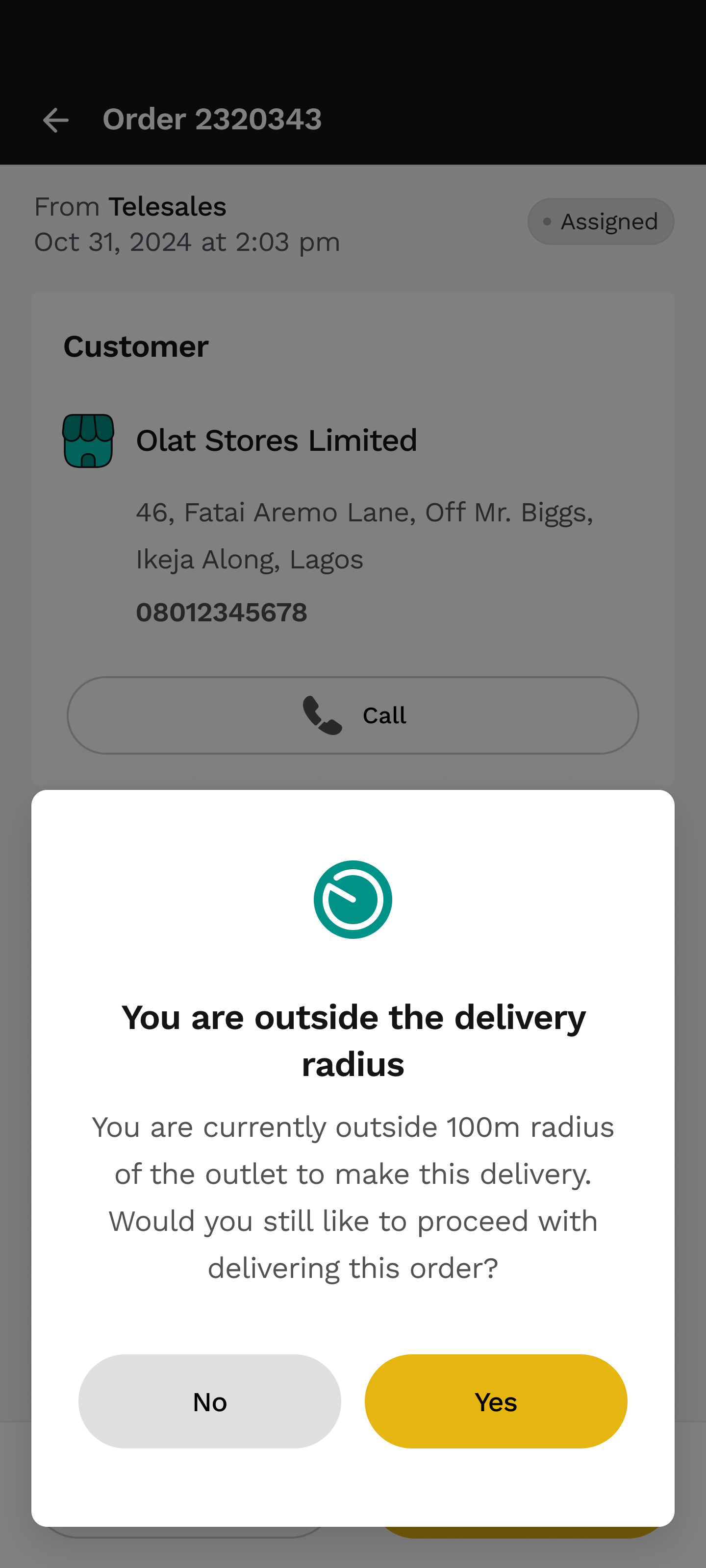
I leaned heavily on high-visibility status indicators, using bold visual cues to help drivers understand delivery progress at a glance. For confirmations, I designed clear and explicit states for delivery completion and proof of delivery, reducing mistakes, disputes, and back-and-forth with operations teams.
Every interaction was designed to be one-hand friendly, with generous spacing and large tap targets that supported quick, safe use on the move. Throughout the process, I maintained a consistent design language that aligned with the broader Kuja ecosystem, while keeping the interface purpose-built for the realities of driving and delivery work.

Authentication flow
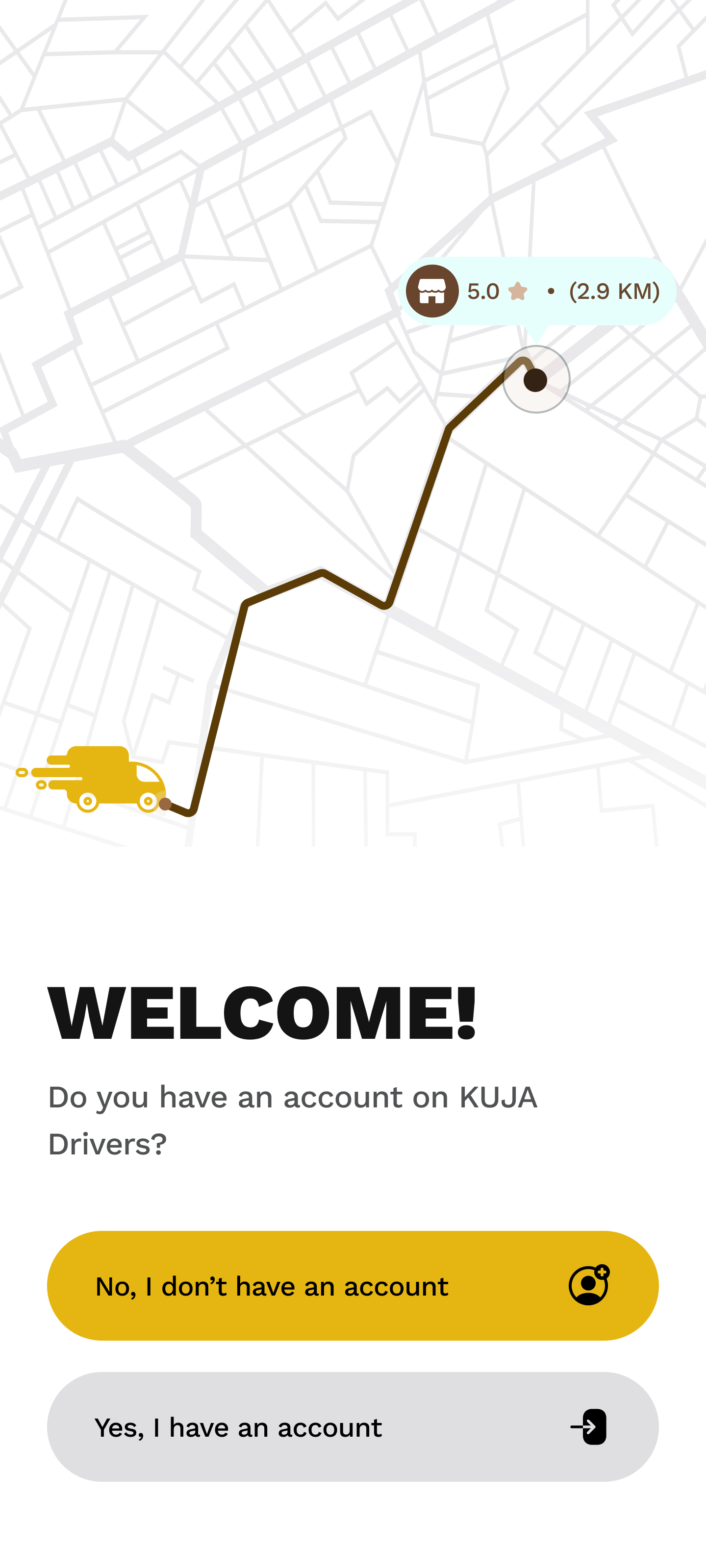
✔ Create account: Set up your Kuja driver account using either email or phone number.
✔ Verify account: Perform the account verification process using authentication code.
✔ Complete profile: Driver finish account set up by completing profile.
Click play to view prototype.
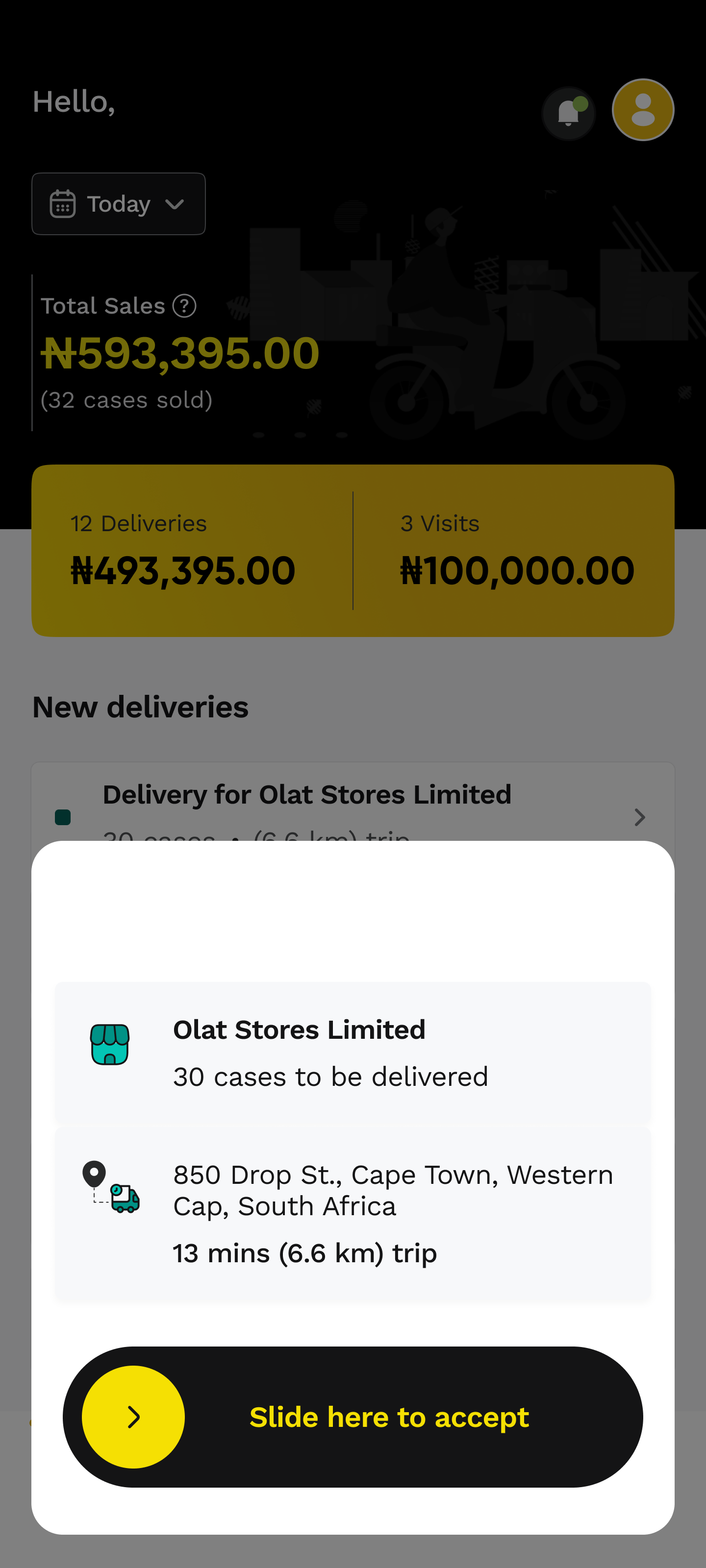
Home flow
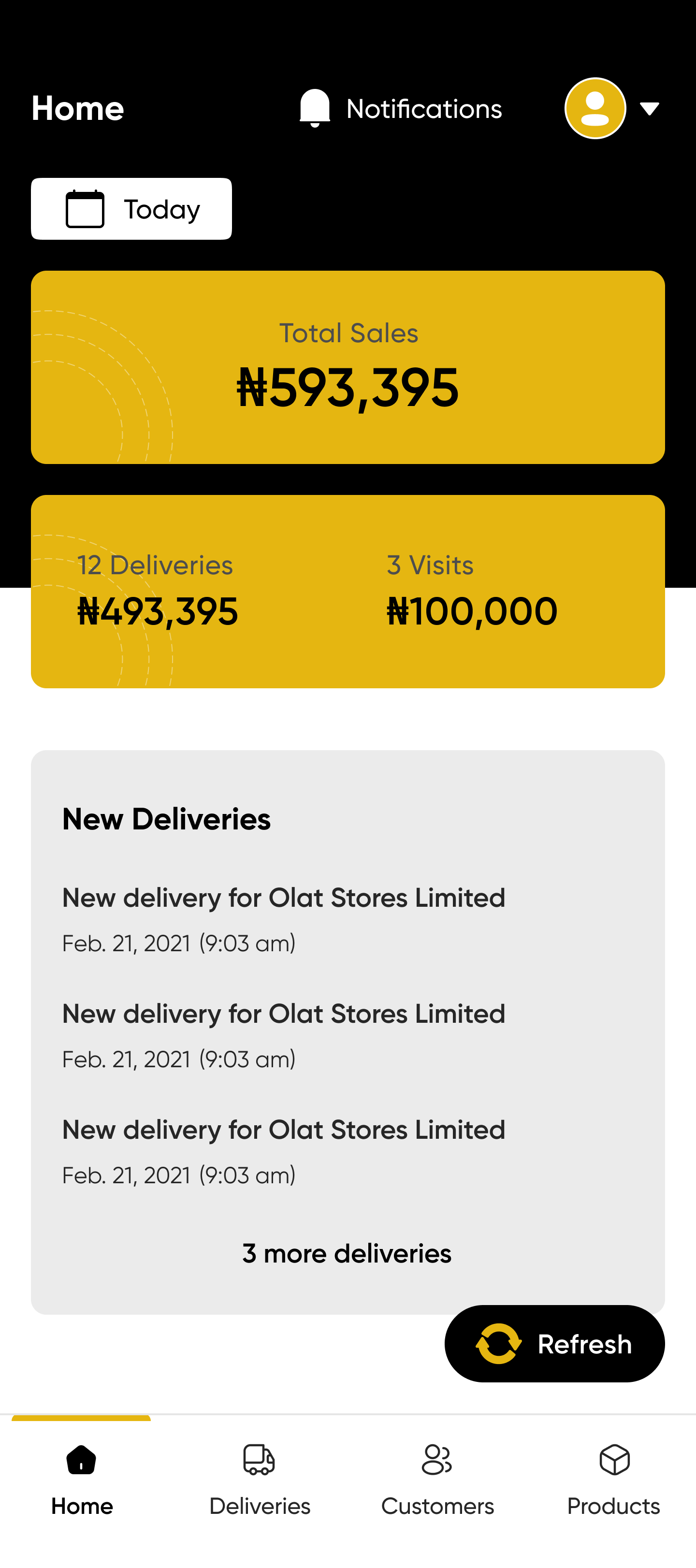
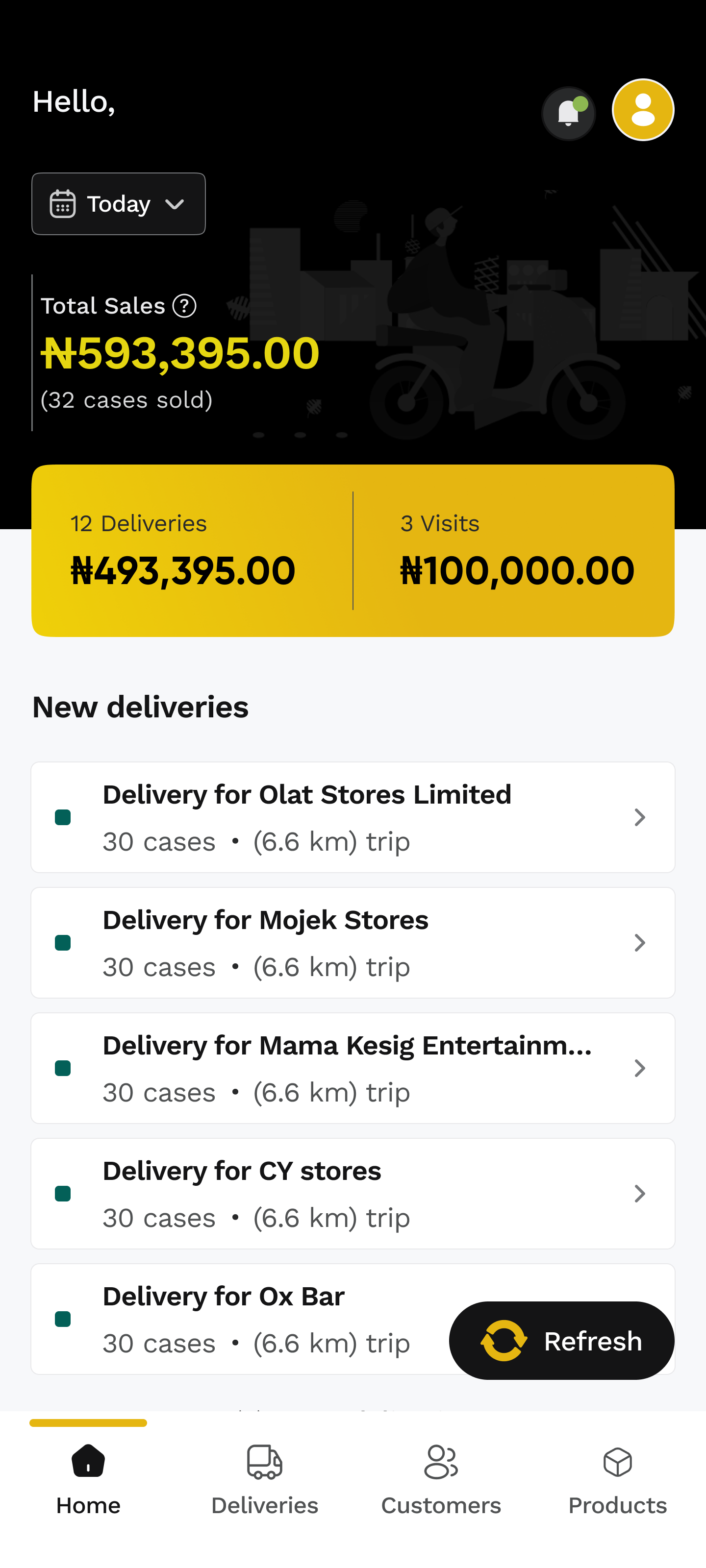
✔ Total sales: View total sales made and total cases sold for a specific period.
✔ New deliveries: Deliveries show up on home screen with basic vital information for drivers.
✔ Deliveries summary: Quick view of all deliveries for the day and total visits made.
✔ Notifications: View notifications quickly for deliveries.
Click play to view prototype.
Delivery flow
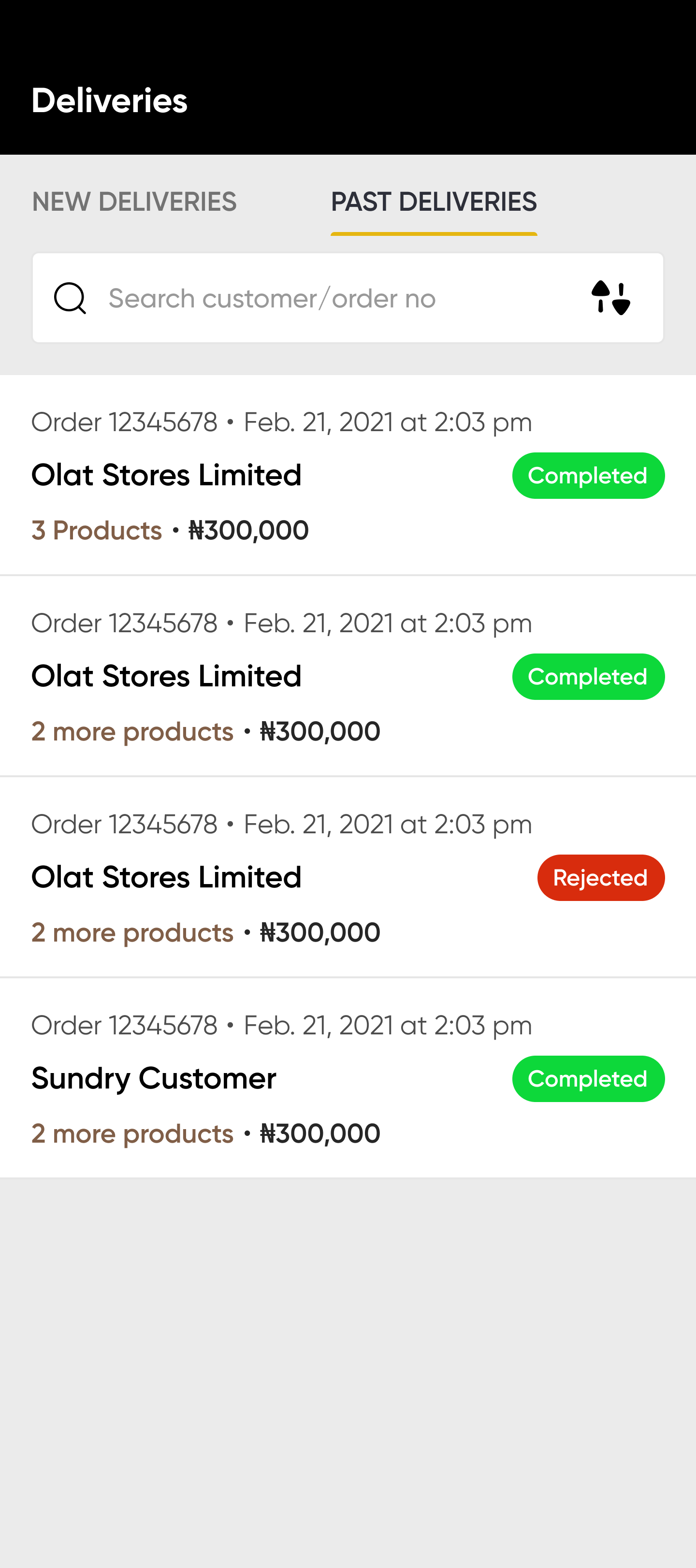
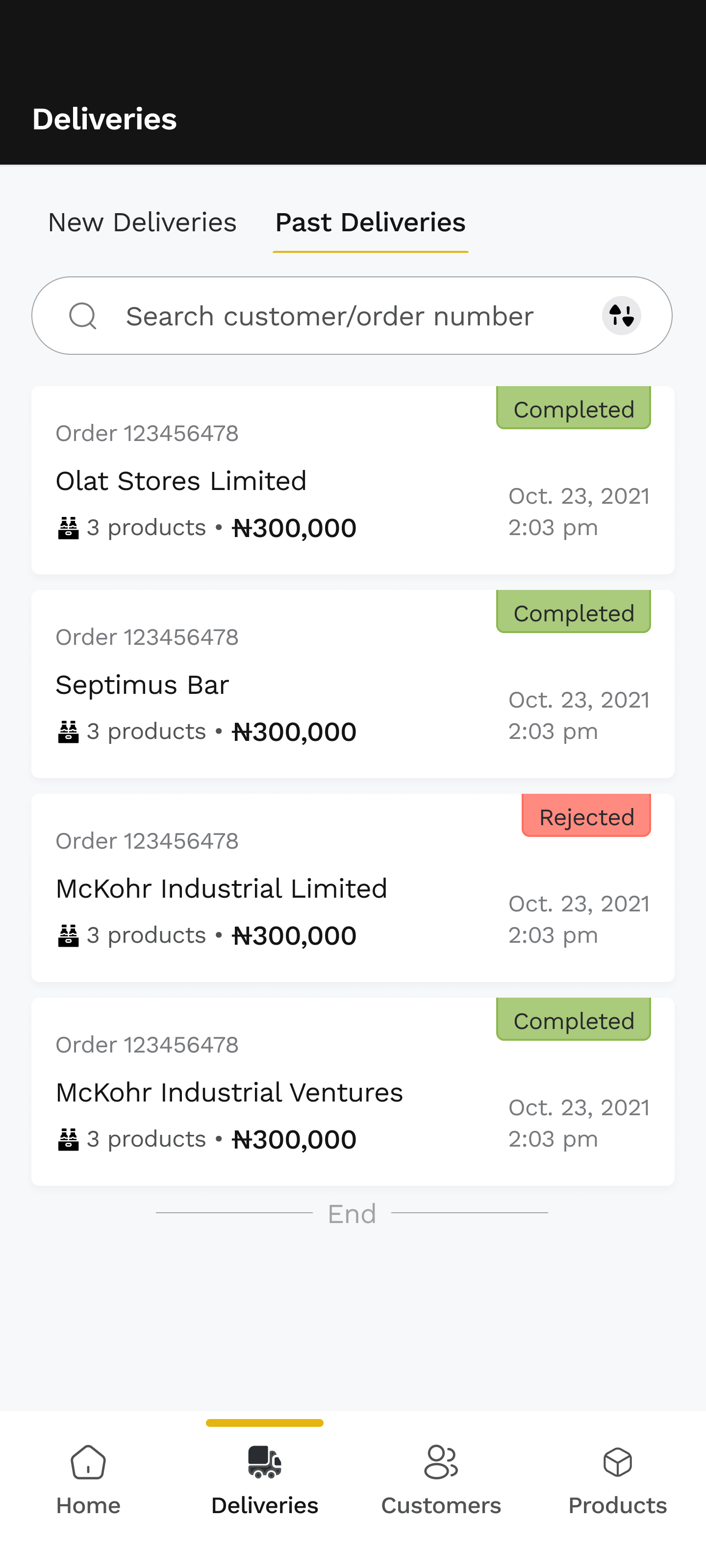
✔ New deliveries: All current deliveries are available on this page.
✔ Past deliveries: Drivers can see all past delivers, both completed and rejected.
✔ Order search: Drivers can quickly search for a particular order or customer.
✔ Delivery status: Each order card has a status tag to help drivers identify the state of the order.
Click play to view prototype.
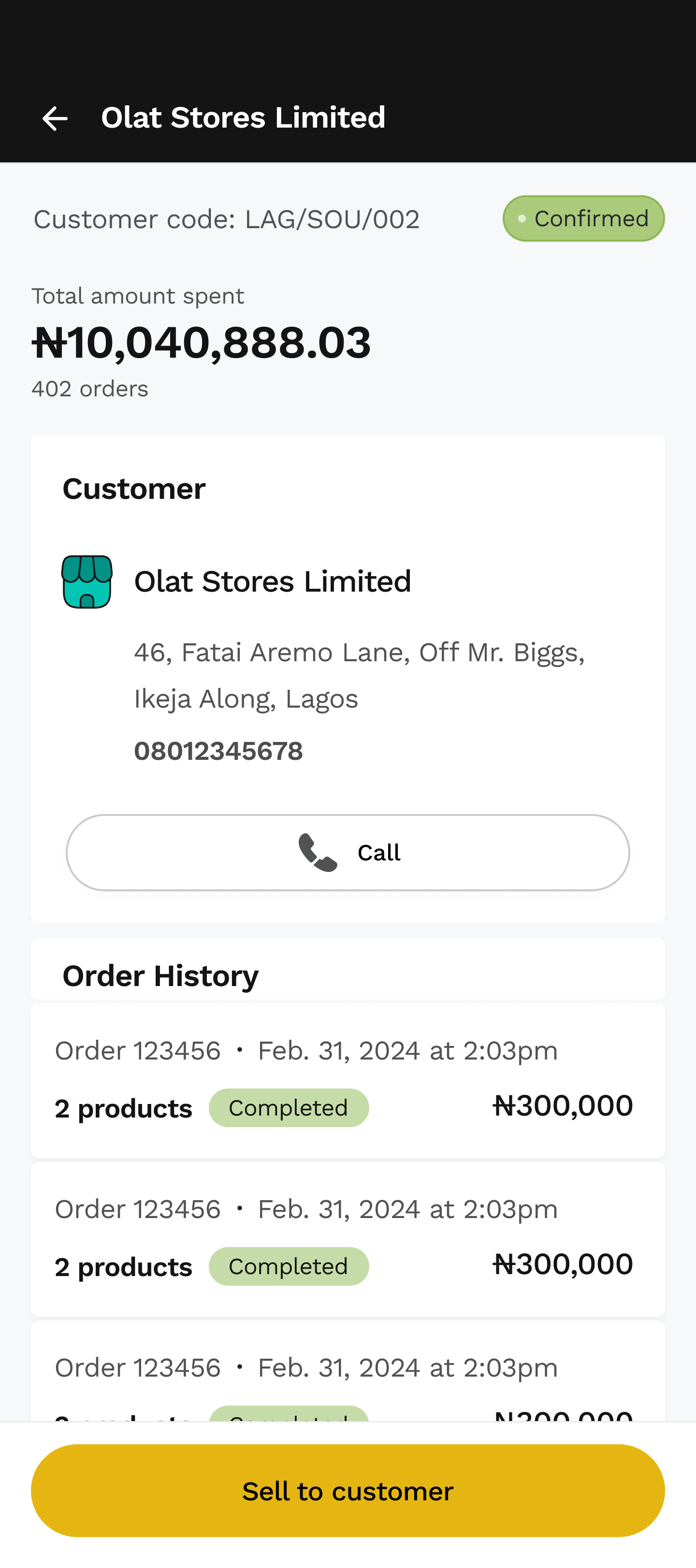
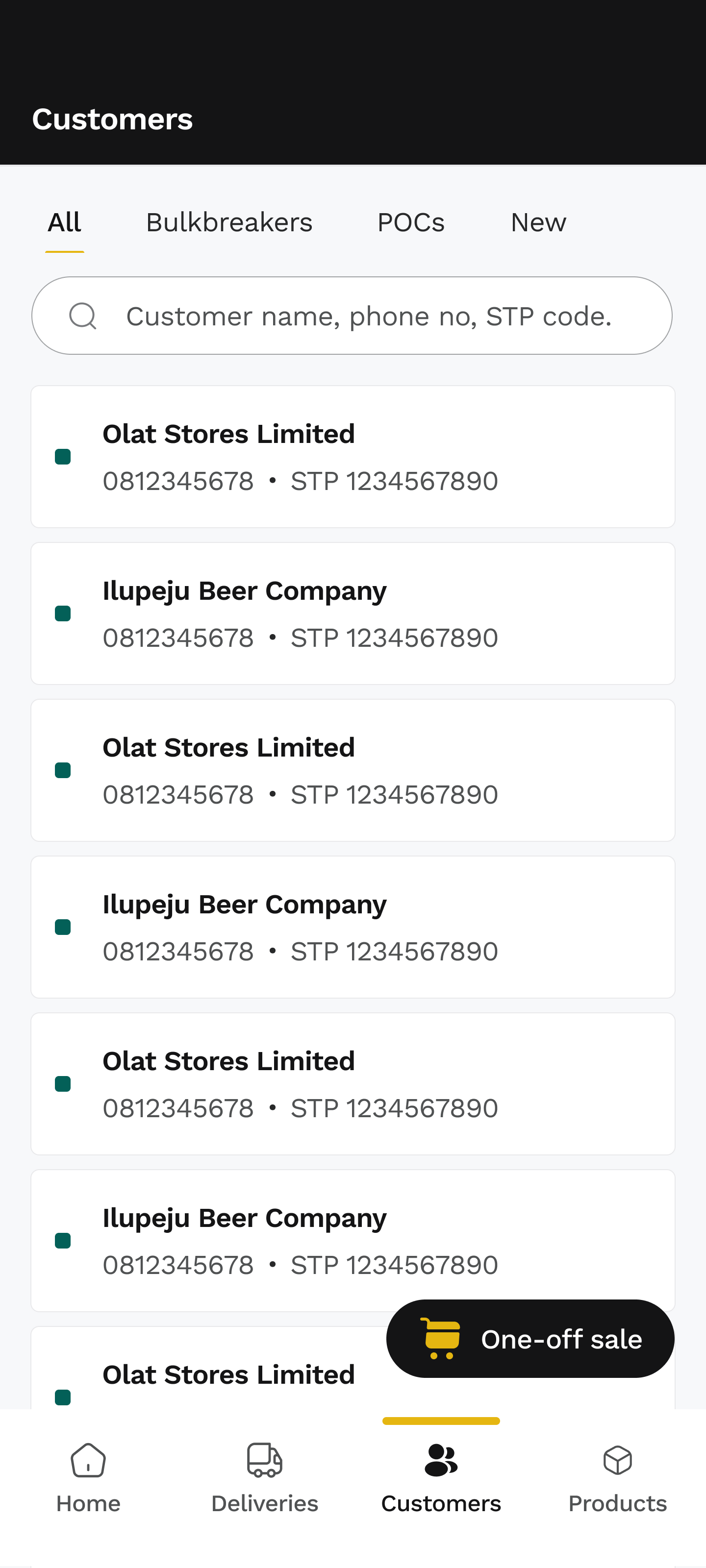
Customers flow
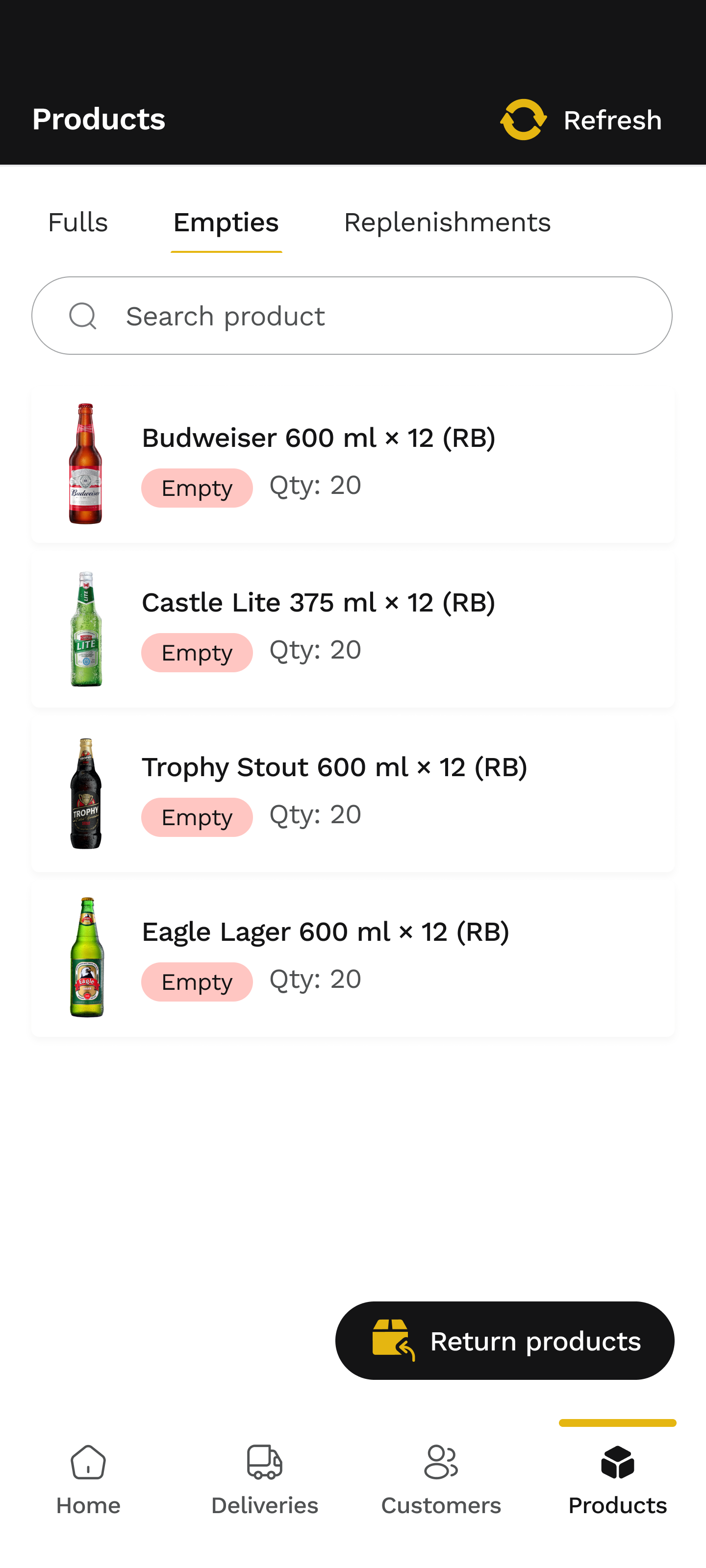
✔ Customer categories: All customers are categorized into different groups for easy handling.
✔ Customer details: View all relevant delivery information of a customer by clicking on customer card.
✔ One off sale: Drivers can process one of sale quickly in sudden situations.
✔ Order search: Drivers can quickly search for a particular customer using their name, phone number or STP code.
Click play to view prototype.
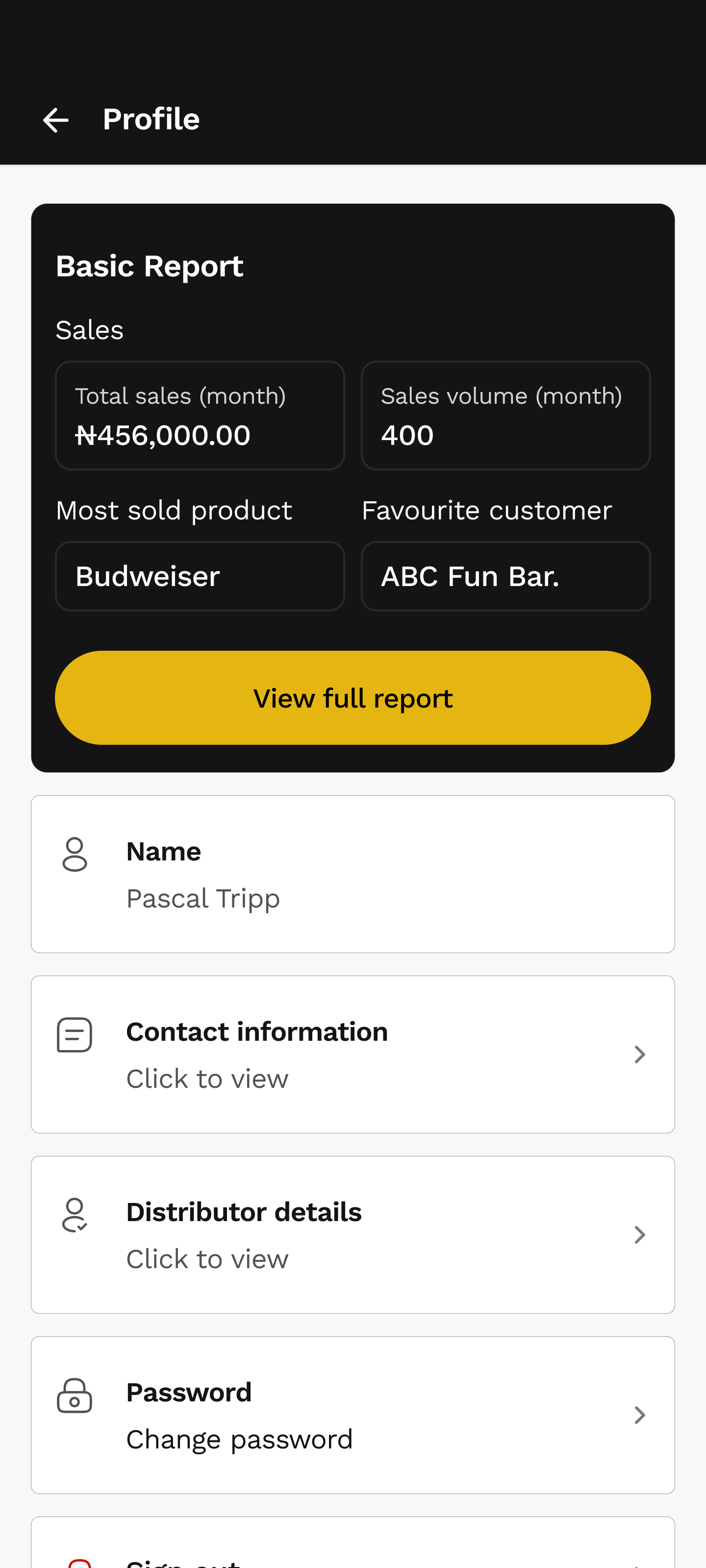
Profile flow
✔ Basic report: Drivers can see basic reports information about all their activities.
✔ Driver details: View details like name, phone number and password
✔ Change password: Protect accounts with password and change password easily
Click play to view prototype.
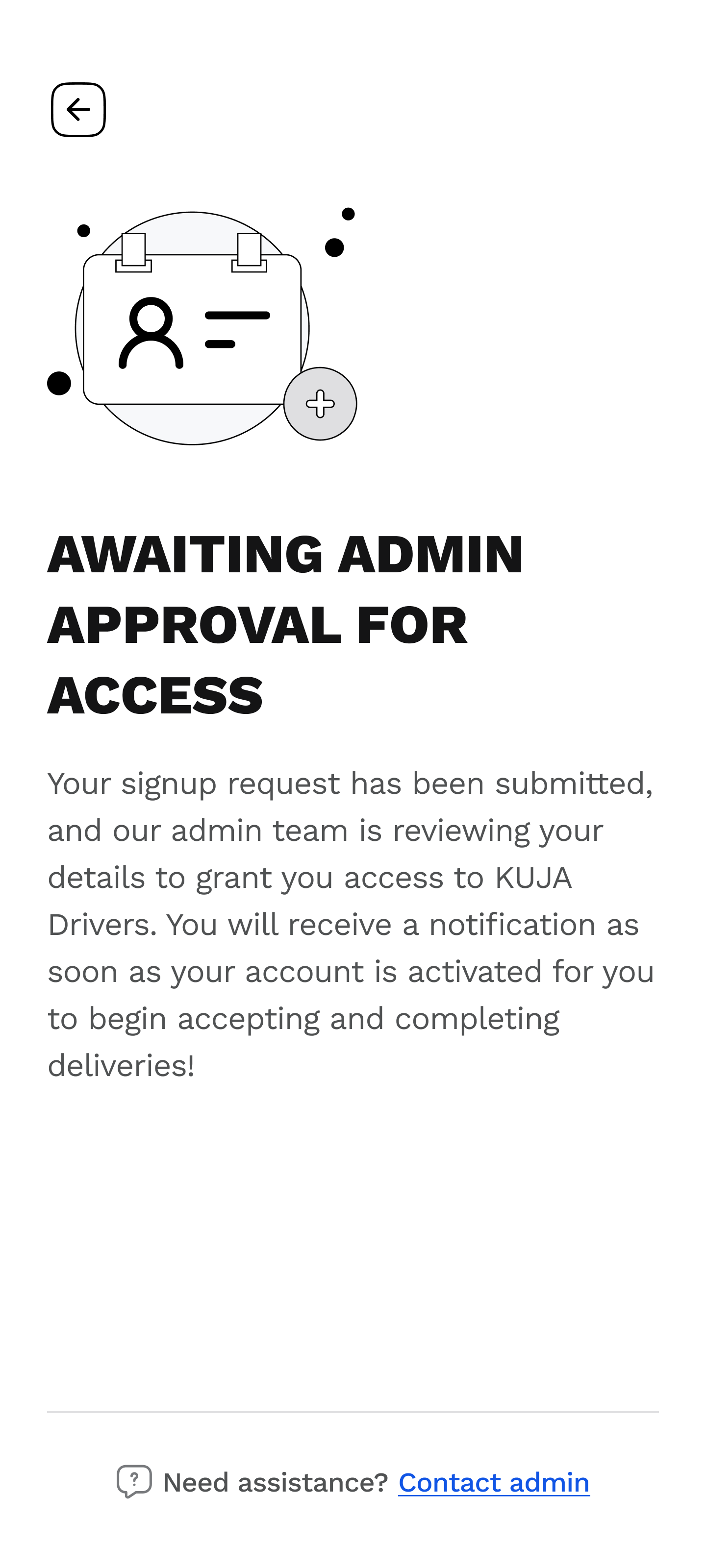
Highlighted mockups
What we achieved
Results and impact
The impact of the work became clear once drivers started using the app in real conditions. By simplifying flows and making each step obvious, I helped drivers improve delivery execution time by 12% without delays navigating the interface mid-trip.
Clearer confirmation states and delivery status visibility significantly reduced errors by over 90%, which meant fewer missed deliveries and less friction during reconciliation. As a result, drivers felt more confident using the app on their own, with fewer interruptions or requests for support.
At the same time, the business gained better operational visibility. Real-time updates made it easier for internal teams to track delivery progress and respond quickly when issues arose. Overall, the driver-first experience improved adoption and made the app a reliable part of drivers’ daily workflow.
Reflection
My takeaways
Working on Kuja Drivers reinforced for me that great design starts with real human constraints, not ideal scenarios. I had to constantly prioritize clarity over complexity, knowing that every decision could directly affect delivery speed, revenue accuracy, and the trust drivers placed in the system.
The project pushed me to work independently while collaborating closely with engineering to make sure what we designed actually held up in tough, real-world conditions. Most importantly, it strengthened my ability to build reliable products for high-pressure environments where every interaction matters and thoughtful UX can make a measurable difference.THANK YOU.

harles


Copyright 2025 by Charles Nwafor

Kuja Drivers
Role
Snr Product Designer
Company
ABinBev
Industry
Beverage and Logistics
Year
Completed 2025
When I worked on Kuja Drivers, I was designing for people operating under real pressure every single day. The app was built for delivery drivers moving AB InBev products across multiple African markets, navigating long routes, tight schedules, unreliable connectivity, and complex delivery plans in fast-paced environments.
As the primary product designer, I designed Kuja Drivers from the ground up. After meeting with the product manager and relevant engineering team, my goal was clear and critical: help drivers complete deliveries faster and more accurately, give them confidence on the road, and at the same time provide the business with real-time visibility into what was happening across logistics operations.
The part I played
My Role
On Kuja Drivers, I owned the design end to end. I started by defining the overall UX strategy and information architecture, making sure the product was grounded in how drivers actually work on the road. From there, I designed every core flow from trip assignment and delivery execution to sales and final delivery confirmation always prioritizing speed, clarity, and ease of use.
I focused heavily on creating a clean, distraction-free interface that drivers could rely on in high-pressure, on-the-move situations. Throughout the process, I worked closely with mobile engineers, product managers, and operations teams to translate real-world constraints into practical design decisions. From early discovery through launch and continuous iteration, I stayed fully accountable for the experience and its impact.
The Challenge
Designing for drivers came with a very different set of constraints, and I felt them at every stage of the project. I had to assume that drivers would often be interacting with the app quickly, sometimes with one hand, while on the move. At the same time, I was designing for environments where network connectivity could be unreliable or drop entirely.
The delivery workflows themselves were complex and tightly bound to time, and even small mistakes in confirmation could have direct consequences for revenue and reconciliation. My challenge was to strip away unnecessary cognitive load while still preserving accuracy, accountability, and clear operational visibility for the business.
The old Drivers
The way I approached this
The solution
To solve these challenges, I focused on speed, clarity, and resilience. I simplified core flows so drivers could complete tasks quickly with one hand, using clear hierarchy and large, tap-friendly controls. Each screen was designed to show only what mattered at that moment, reducing cognitive load on the road.
I also designed for unreliable connectivity by supporting offline actions with clear sync states, so drivers could work confidently even in low-network areas. Complex delivery steps were broken into guided, validated flows to prevent costly errors while maintaining accountability. The result was an experience that felt fast and dependable for drivers, while still giving the business clear operational visibility.
The new Drivers
Kuja Shop design highlights
Redesign key-points
Some of the most important decisions I made were driven by how drivers actually work in the field. I broke order acceptance and delivery into clear, linear stages, so drivers always knew exactly what to do next without having to think or hesitate.
I leaned heavily on high-visibility status indicators, using bold visual cues to help drivers understand delivery progress at a glance. For confirmations, I designed clear and explicit states for delivery completion and proof of delivery, reducing mistakes, disputes, and back-and-forth with operations teams.
Every interaction was designed to be one-hand friendly, with generous spacing and large tap targets that supported quick, safe use on the move. Throughout the process, I maintained a consistent design language that aligned with the broader Kuja ecosystem, while keeping the interface purpose-built for the realities of driving and delivery work.
Authentication flow
✔ Create account: Set up your Kuja driver account using either email or phone number.
✔ Verify account: Perform the account verification process using authentication code.
✔ Complete profile: Driver finish account set up by completing profile.
Click play to view prototype.
Home flow
✔ Total sales: View total sales made and total cases sold for a specific period.
✔ New deliveries: Deliveries show up on home screen with basic vital information for drivers.
✔ Deliveries summary: Quick view of all deliveries for the day and total visits made.
✔ Notifications: View notifications quickly for deliveries.
Click play to view prototype.
Delivery flow
✔ New deliveries: All current deliveries are available on this page.
✔ Past deliveries: Drivers can see all past delivers, both completed and rejected.
✔ Order search: Drivers can quickly search for a particular order or customer
✔ Delivery status: Each order card has a status tag to help drivers identify the state of the order.
Click play to view prototype.
Customers flow
✔ Customer categories: All customers are categorized into different groups for easy handling.
✔ Customer details: View all relevant delivery information of a customer by clicking on customer card.
✔ One off sale: Drivers can process one of sale quickly in sudden situations.
✔ Order search: Drivers can quickly search for a particular customer using their name, phone number or STP code.
Click play to view prototype.
Profile flow
✔ Basic report: Drivers can see basic reports information about all their activities.
✔ Driver details: View details like name, phone number and password
✔ Change password: Protect accounts with password and change password easily
Click play to view prototype.
Highlighted mockups
What we achieved
Results and impact
The impact of the work became clear once drivers started using the app in real conditions. By simplifying flows and making each step obvious, I helped drivers improve delivery execution time by 12% without delays navigating the interface mid-trip.
Clearer confirmation states and delivery status visibility significantly reduced errors by over 90%, which meant fewer missed deliveries and less friction during reconciliation. As a result, drivers felt more confident using the app on their own, with fewer interruptions or requests for support.
At the same time, the business gained better operational visibility. Real-time updates made it easier for internal teams to track delivery progress and respond quickly when issues arose. Overall, the driver-first experience improved adoption and made the app a reliable part of drivers’ daily workflow.
Reflection
My takeaways
Working on Kuja Drivers reinforced for me that great design starts with real human constraints, not ideal scenarios. I had to constantly prioritize clarity over complexity, knowing that every decision could directly affect delivery speed, revenue accuracy, and the trust drivers placed in the system.
The project pushed me to work independently while collaborating closely with engineering to make sure what we designed actually held up in tough, real-world conditions. Most importantly, it strengthened my ability to build reliable products for high-pressure environments where every interaction matters and thoughtful UX can make a measurable difference.THANK YOU.
harles
Copyright 2025 by Charles Nwafor
Kuja Drivers
Role
Snr Product Designer
Company
ABinBev
Industry
Beverage and Logistics
Year
Completed 2025
When I worked on Kuja Drivers, I was designing for people operating under real pressure every single day. The app was built for delivery drivers moving AB InBev products across multiple African markets, navigating long routes, tight schedules, unreliable connectivity, and complex delivery plans in fast-paced environments.
As the primary product designer, I designed Kuja Drivers new look from the ground up. After meeting with the product manager and relevant engineering team, my goal was clear and critical: help drivers complete deliveries faster and more accurately, give them confidence on the road, and at the same time provide the business with real-time visibility into what was happening across logistics operations.
The part I played
My Role
On Kuja Drivers, I owned the design end to end. I started by defining the overall UX strategy and information architecture, making sure the product was grounded in how drivers actually work on the road. From there, I designed every core flow from trip assignment and delivery execution to sales and final delivery confirmation always prioritizing speed, clarity, and ease of use.
I focused heavily on creating a clean, distraction-free interface that drivers could rely on in high-pressure, on-the-move situations. Throughout the process, I worked closely with mobile engineers, product managers, and operations teams to translate real-world constraints into practical design decisions. From early discovery through launch and continuous iteration, I stayed fully accountable for the experience and its impact.
The Challenge
Designing for drivers came with a very different set of constraints, and I felt them at every stage of the project. I had to assume that drivers would often be interacting with the app quickly, sometimes with one hand, while on the move. At the same time, I was designing for environments where network connectivity could be unreliable or drop entirely.
The delivery workflows themselves were complex and tightly bound to time, and even small mistakes in confirmation could have direct consequences for revenue and reconciliation. My challenge was to strip away unnecessary cognitive load while still preserving accuracy, accountability, and clear operational visibility for the business.
The old Drivers
The way I approached this
The solution
To solve these challenges, I focused on speed, clarity, and resilience. I simplified core flows so drivers could complete tasks quickly with one hand, using clear hierarchy and large, tap-friendly controls. Each screen was designed to show only what mattered at that moment, reducing cognitive load on the road.
I also designed for unreliable connectivity by supporting offline actions with clear sync states, so drivers could work confidently even in low-network areas. Complex delivery steps were broken into guided, validated flows to prevent costly errors while maintaining accountability. The result was an experience that felt fast and dependable for drivers, while still giving the business clear operational visibility.
The new Drivers
Kuja Drivers design highlights
Redesign key-points
Some of the most important decisions I made were driven by how drivers actually work in the field. I broke order acceptance and delivery into clear, linear stages, so drivers always knew exactly what to do next without having to think or hesitate.
I leaned heavily on high-visibility status indicators, using bold visual cues to help drivers understand delivery progress at a glance. For confirmations, I designed clear and explicit states for delivery completion and proof of delivery, reducing mistakes, disputes, and back-and-forth with operations teams.
Every interaction was designed to be one-hand friendly, with generous spacing and large tap targets that supported quick, safe use on the move. Throughout the process, I maintained a consistent design language that aligned with the broader Kuja ecosystem, while keeping the interface purpose-built for the realities of driving and delivery work.
Authentication flow
✔ Create account: Set up your Kuja driver account using either email or phone number.
✔ Verify account: Perform the account verification process using authentication code.
✔ Complete profile: Driver finish account set up by completing profile.
Click play to view prototype.
Home flow
✔ Total sales: View total sales made and total cases sold for a specific period.
✔ New deliveries: Deliveries show up on home screen with basic vital information for drivers.
✔ Deliveries summary: Quick view of all deliveries for the day and total visits made.
✔ Notifications: View notifications quickly for deliveries.
Click play to view prototype.
Delivery flow
✔ New deliveries: All current deliveries are available on this page.
✔ Past deliveries: Drivers can see all past delivers, both completed and rejected.
✔ Order search: Drivers can quickly search for a particular order or customer
✔ Delivery status: Each order card has a status tag to help drivers identify the state of the order.
Click play to view prototype.
Customers flow
✔ Customer categories: All customers are categorized into different groups for easy handling.
✔ Customer details: View all relevant delivery information of a customer by clicking on customer card.
✔ One off sale: Drivers can process one of sale quickly in sudden situations.
✔ Order search: Drivers can quickly search for a particular customer using their name, phone number or STP code.
Click play to view prototype.
Profile flow
✔ Basic report: Drivers can see basic reports information about all their activities.
✔ Driver details: View details like name, phone number and password
✔ Change password: Protect accounts with password and change password easily
Click play to view prototype.
Highlighted mockups
What we achieved
Results and impact
The impact of the work became clear once drivers started using the app in real conditions. By simplifying flows and making each step obvious, I helped drivers improve delivery execution time by 12% without delays navigating the interface mid-trip.
Clearer confirmation states and delivery status visibility significantly reduced errors by over 90%, which meant fewer missed deliveries and less friction during reconciliation. As a result, drivers felt more confident using the app on their own, with fewer interruptions or requests for support.
At the same time, the business gained better operational visibility. Real-time updates made it easier for internal teams to track delivery progress and respond quickly when issues arose. Overall, the driver-first experience improved adoption and made the app a reliable part of drivers’ daily workflow.
Reflection
My takeaways
Working on Kuja Drivers reinforced for me that great design starts with real human constraints, not ideal scenarios. I had to constantly prioritize clarity over complexity, knowing that every decision could directly affect delivery speed, revenue accuracy, and the trust drivers placed in the system.
The project pushed me to work independently while collaborating closely with engineering to make sure what we designed actually held up in tough, real-world conditions. Most importantly, it strengthened my ability to build reliable products for high-pressure environments where every interaction matters and thoughtful UX can make a measurable difference.THANK YOU.
Other projects
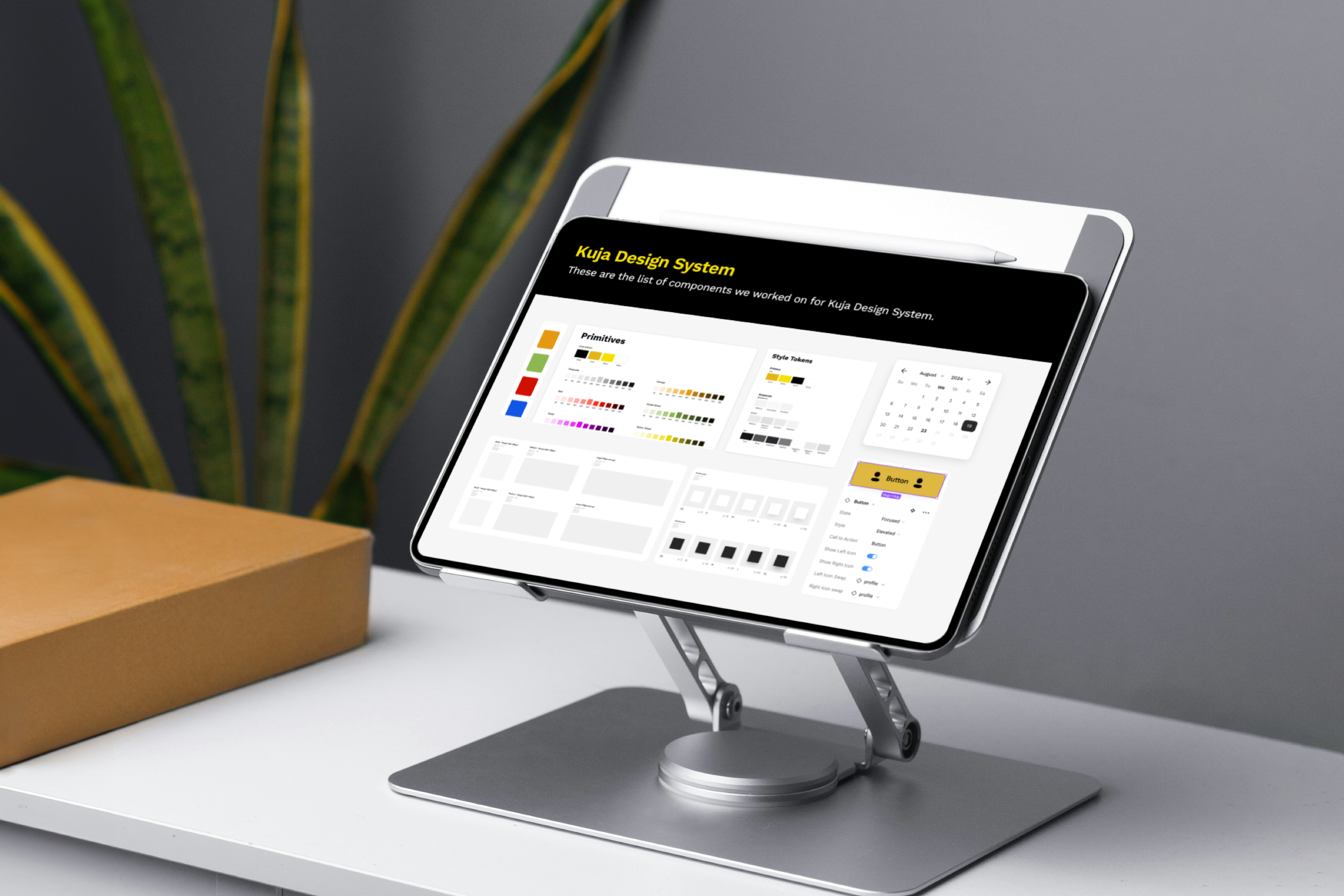
Kuja design system
Kuja design system build
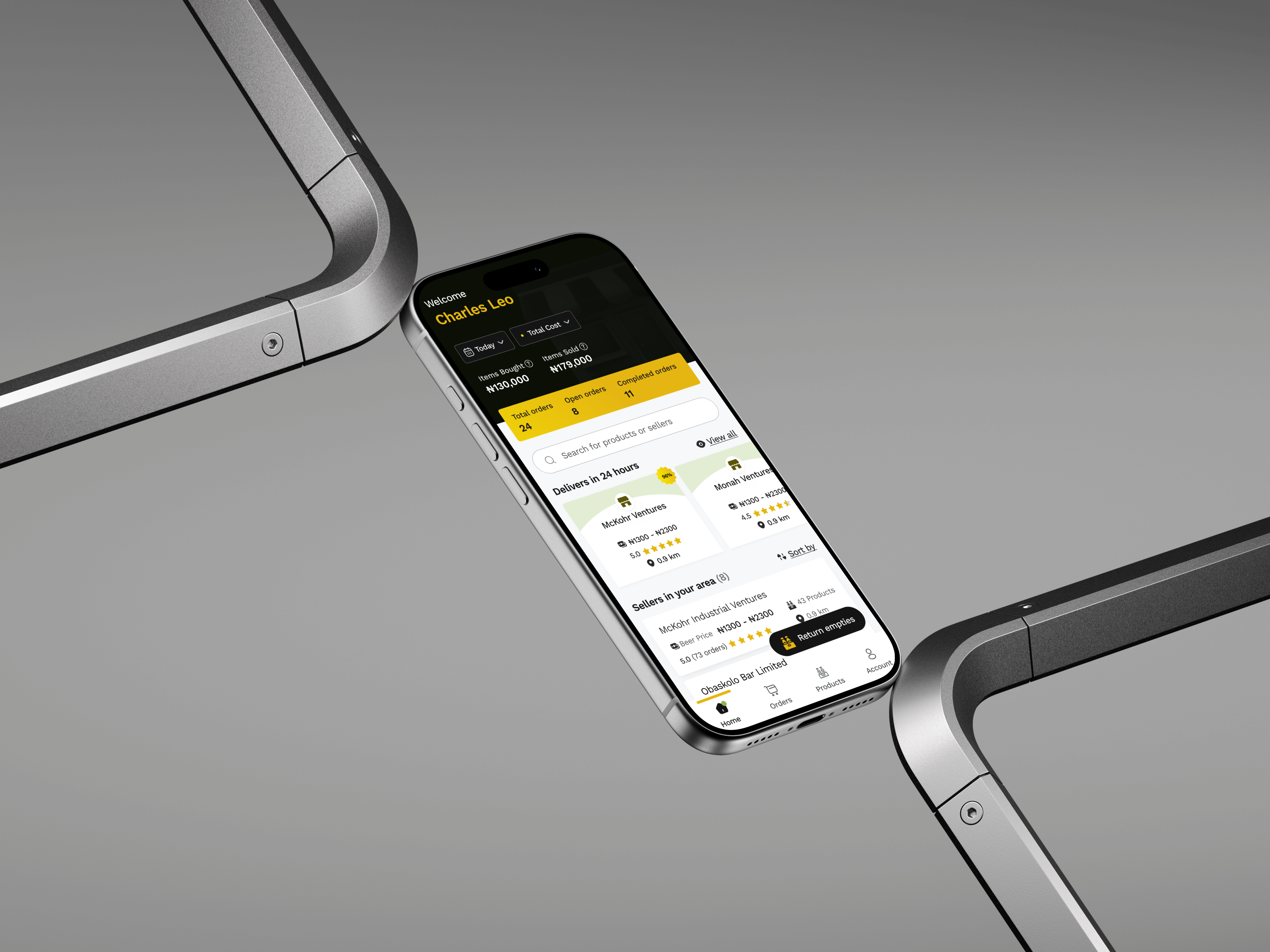
Kuja Shop App
Kuja Shop mobile app design.
harles
Copyright 2025 by Charles Nwafor